

Wire Mesh Fencing

DescriptionImportant Note: After-sales Terms
Important NoteTo All VEVOR Product Distributors:
To protect the VEVOR brand image, maintain a stable market pricing system, and safeguard consumer rights, the following distribution policy is hereby clarified:
1. Product Listing Guidelines
VEVOR does not grant brand authorization to third-party distributors. All distributors must strictly follow the "White-Label Listing" principle:
1. Do not use any VEVOR brand identifiers, including but not limited to the logo, trademark, or brand name.
2. Do not directly use any official VEVOR images, videos, or other branded materials.
●Distributors must create their own materials (product images, videos, descriptions) without any brand association.
●If using VEVOR-provided materials, all branding must be fully removed and edited to eliminate any trace of brand identity.
2. Pricing Control Requirements
When selling VEVOR products, the listed price (excluding shipping fees and additional charges) must not be lower than the official VEVOR Amazon store price for the same product.
3. Liability for Violations
If a distributor violates this policy and causes any of the following:
1. Complaints, platform penalties, or financial losses to the distributor;
2. Complaints, platform penalties, or financial losses to the VEVOR brand;
3. Disruption of market pricing or damage to consumer rights;
The violating distributor shall bear full legal responsibility and compensation, and VEVOR will:
●Not provide any assistance in resolving related issues;
●Reserve the right to terminate the partnership and pursue further liability.
4. Effective Date & Enforcement
This statement takes effect upon release.
VEVOR reserves the right to supervise distribution channels and the final interpretation of this policy.
Please strictly follow the above terms. Thank you for your cooperation!
MaterialOthersProduct AttributesOrdinaryPackage Size955*210*210(mm)
NOTE: THIS PRODUCT CANNOT BE SHIPPED TO CALIFORNIA, USA.
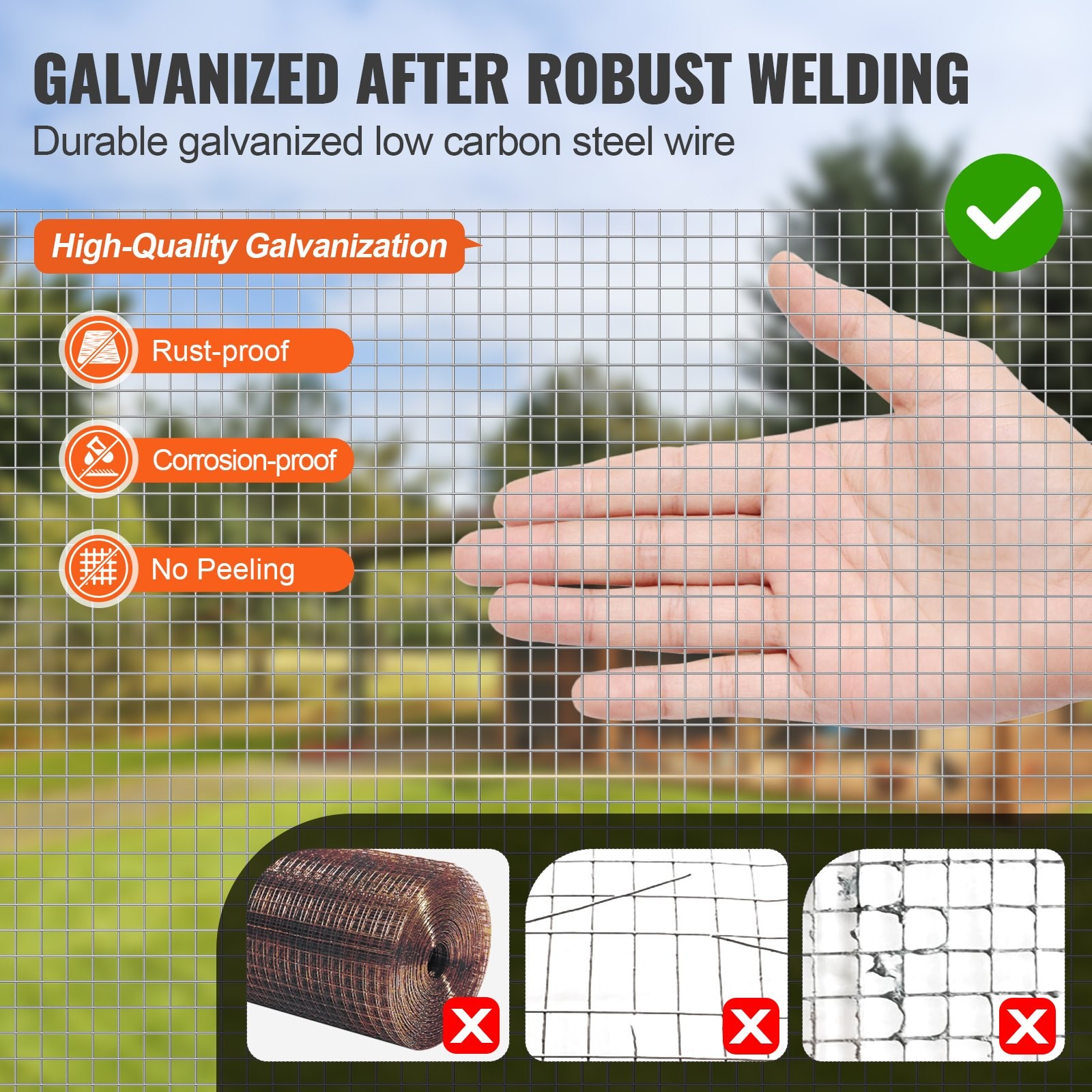
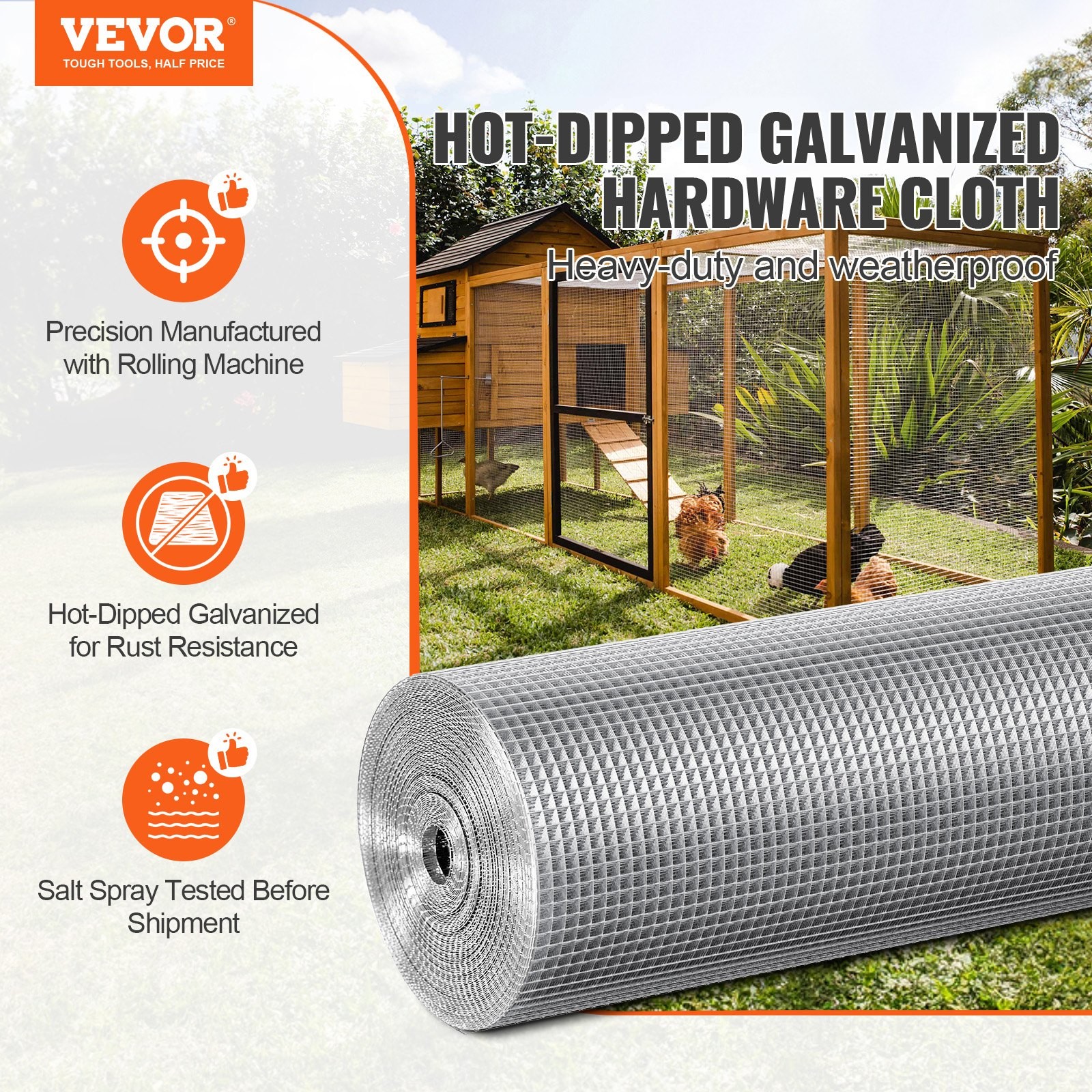
Heavy-Duty Hot-Dipped Galvanization: Our low-carbon steel hardware cloth undergoes professional hot-dipped galvanization for a uniform
coating without bubbles. Pre-tested for salt spray, it ensures durable corrosion resistance, lasting through years of outdoor use without
needing replacements.
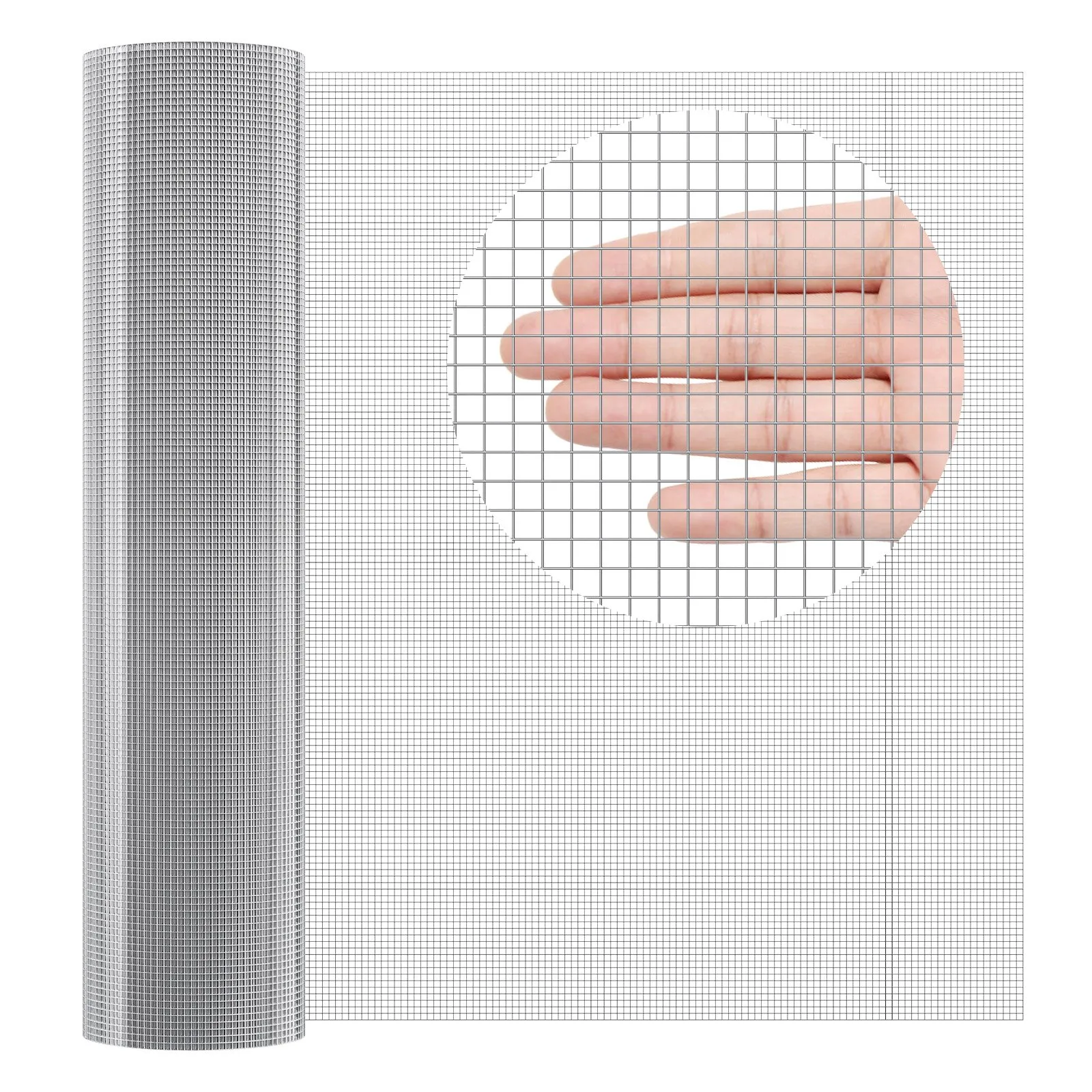
Robust Welded Structure: Our 36in x 100 ft hardware cloth is welded from low-carbon steel wire into a sturdy mesh structure, followed by
a post-weld galvanization process. Each weld point is zinc-coated to prevent detachment, ensuring a bright, rust-proof finish even after
prolonged exposure to different weather conditions.
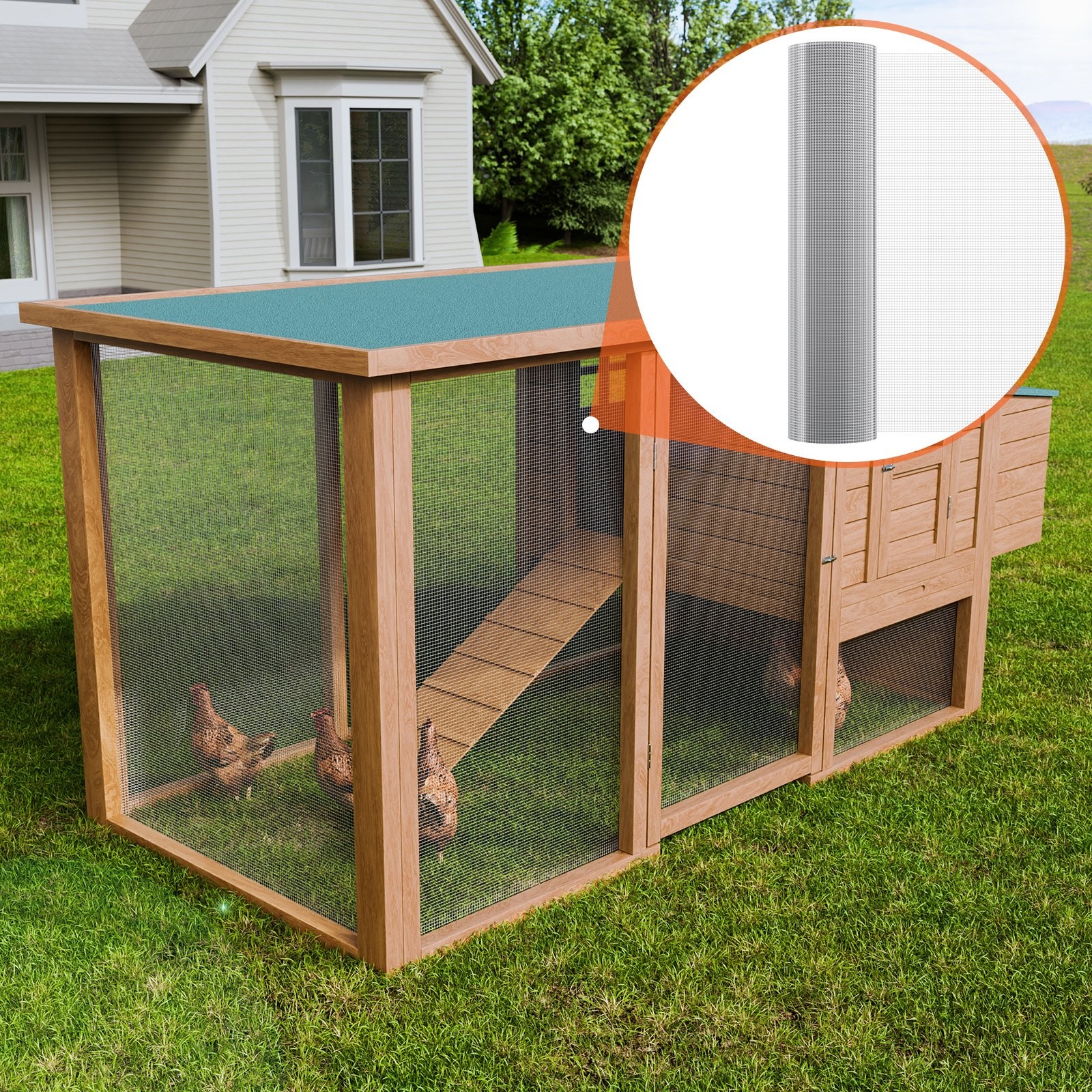
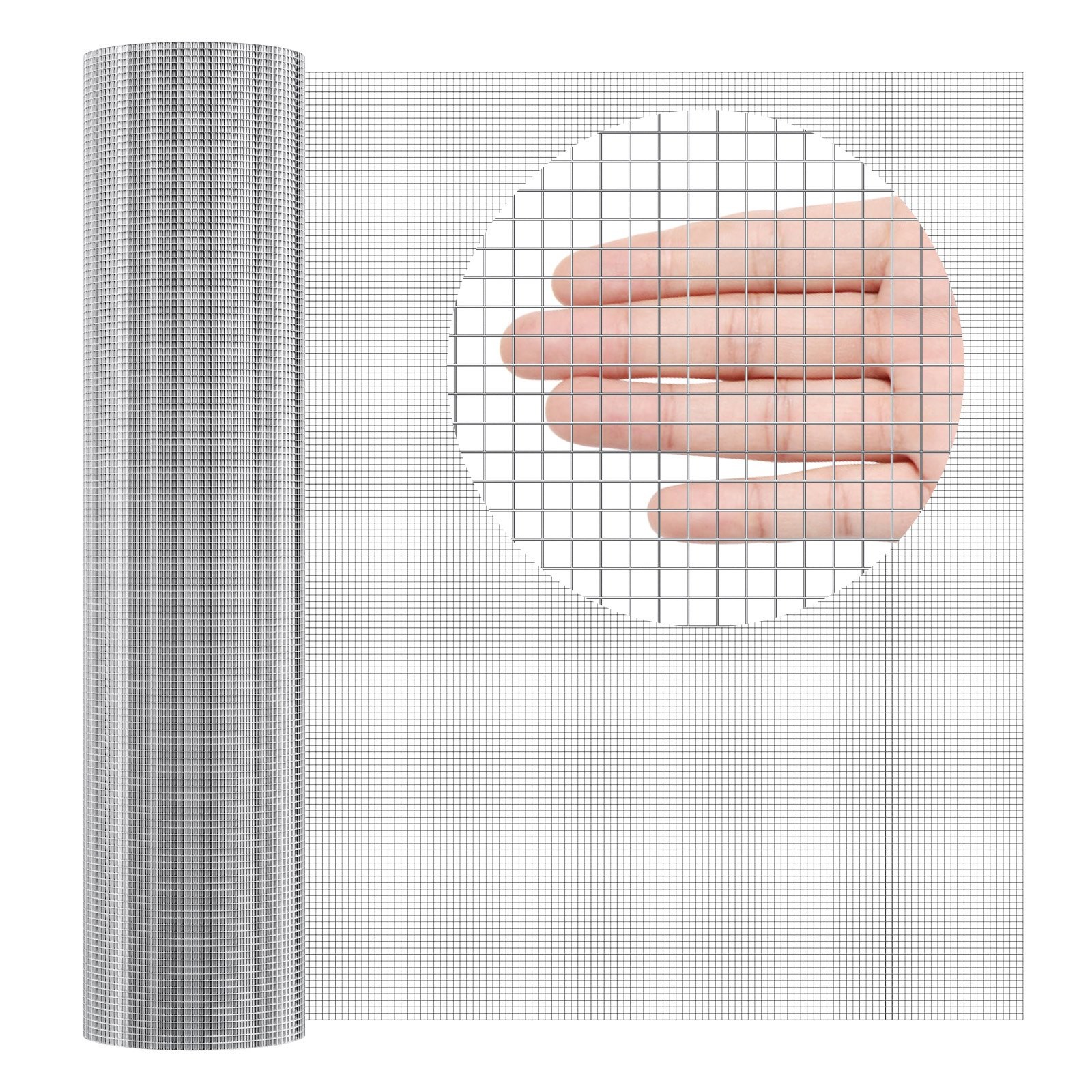
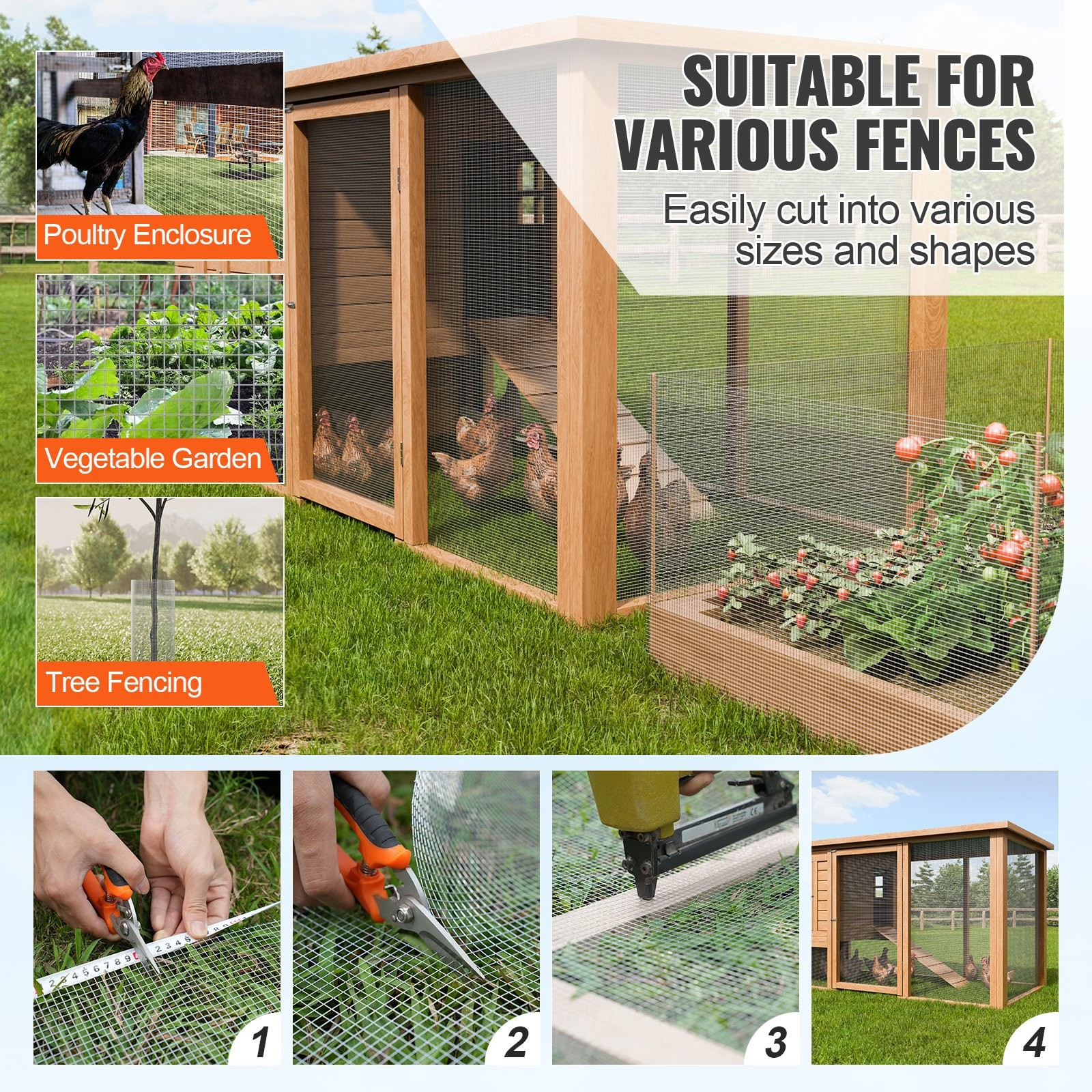
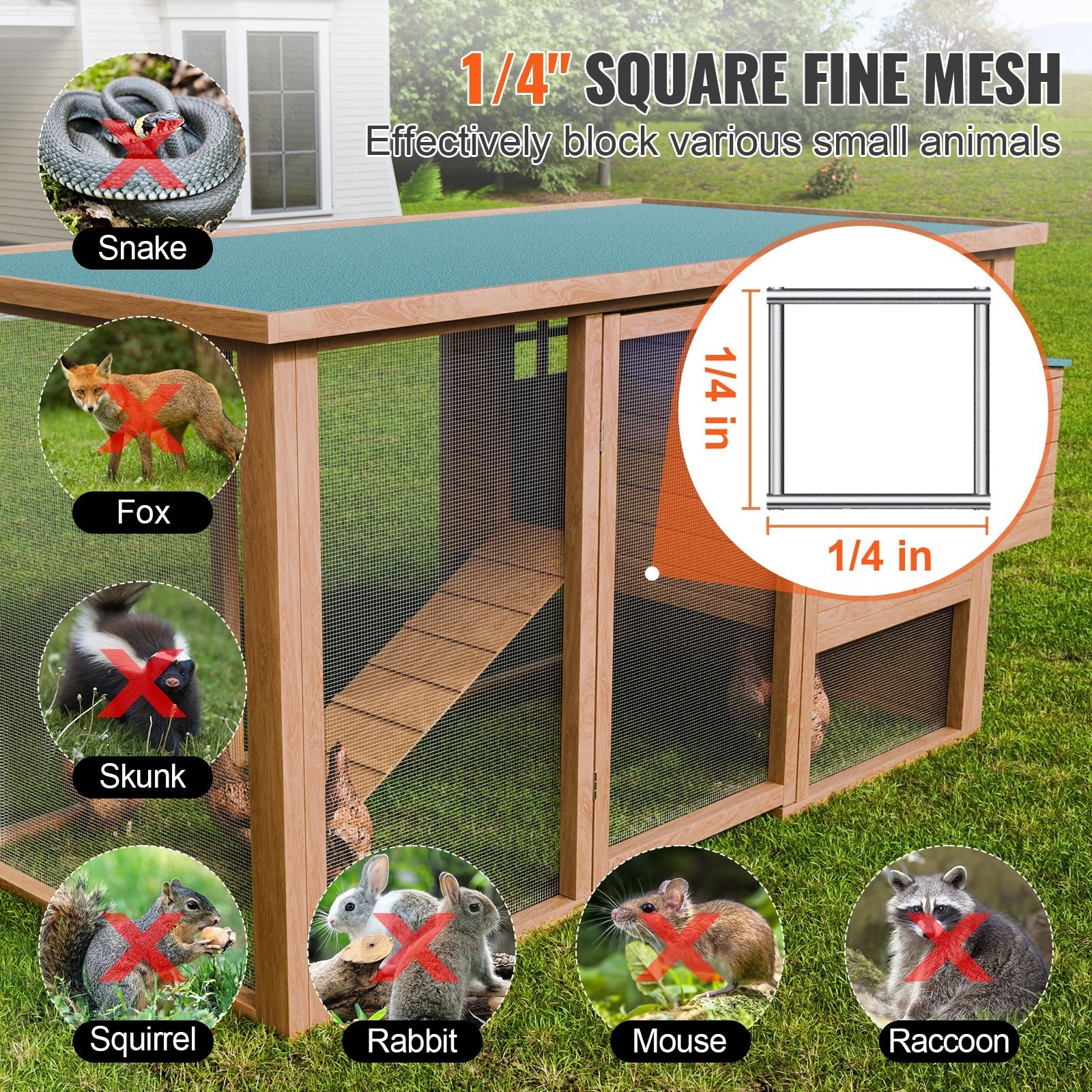
1/4-inch Fine Mesh: Featuring narrow 1/4" mesh, even small animals find it difficult to penetrate. Perfect for safeguarding vegetable
gardens from small rodents like squirrels, rabbits, raccoons, skunks, foxes, snakes, and more.
Wire Mesh Fencing – Durable, Versatile and High‑Performance Boundary Solution
Perfect for Property Owners, DIY Enthusiasts, Farmers, and Security‑Focused Spaces
Wire Mesh Fencing is an essential fencing solution for anyone seeking strong, reliable, and cost‑effective boundary protection in New Zealand environments. Whether you need secure enclosure for livestock, garden protection from pests, perimeter definition for property, industrial site security, or a versatile barrier for DIY projects and landscaping, wire mesh fencing delivers performance, durability, and peace of mind. Ideal across rural, urban, and commercial settings, this fencing solution combines long‑lasting strength with low maintenance and broad adaptability to diverse terrain and use cases.
Wire mesh fencing is suitable for agricultural paddocks, residential yards, sports grounds, construction sites, public parks, schools, industrial facilities, and animal containment areas. Its open grid design strikes the perfect balance between visibility, airflow, and toughness, making it a preferred choice where clear sightlines and secure demarcation are required. Designed to withstand harsh weather conditions and ongoing wear, quality wire mesh fencing offers exceptional value while supporting safety and operational functionality.
Description – Wire Mesh Fencing
Wire mesh fencing refers to a category of fencing products constructed from interconnected metal wires that form a grid or mesh pattern. The wire can be manufactured from galvanized steel, stainless steel, or PVC‑coated materials to enhance corrosion resistance and longevity. This fencing type is engineered to provide strong structural integrity while remaining flexible enough to install across uneven ground and landscape contours without compromising performance.
What sets wire mesh fencing apart from other fencing options is its combination of strength, transparency, and adaptability. Unlike solid panels that block sightlines, wire mesh allows visibility through the boundary while still preventing unauthorised access or intrusion by people, animals, or vehicles. This makes it a valuable choice for locations where security and surveillance are priorities, such as around school perimeters, commercial facilities, or residential yards where neighbourhood visibility is desirable.
Wire mesh fencing also excels in agricultural applications. Farmers and property owners across New Zealand frequently rely on it to contain livestock such as sheep, cattle, goats, and poultry. The mesh grid can be scaled to match specific containment needs, whether for larger animals where larger openings suffice, or for smaller animals requiring tighter mesh spacing. Reinforced mesh variations further enhance strength to withstand impact and pressure from animals or environmental forces.
Installation of wire mesh fencing can be undertaken by professional contractors or competent DIYers, depending on the complexity of terrain and project scale. Essential components include mesh rolls or panels, sturdy posts (steel or timber), tensioning wires, clips or ties, fasteners, and ground anchors where required. With careful planning and proper installation technique, wire mesh fencing can provide decades of reliable performance.
In New Zealand’s varied climate — from coastal winds and salty air to inland rain and temperature fluctuations — selecting the right gauge, coating, and support system is crucial for long‑term durability. High‑quality galvanised or PVC‑coated mesh resists rust and corrosion, while robust posts and tensioning hardware maintain structural integrity under load.
Construction, Materials & Design
Wire mesh fencing is engineered using metal wires woven or welded into a pattern of uniform openings. The specifics of the mesh — including wire diameter (gauge), aperture size (opening dimensions), and coating — determine the strength, visibility, and application suitability. Standard mesh patterns include square, rectangular, hexagonal (often referred to as chicken wire), and welded configurations. Each pattern is engineered for optimal performance within specific use cases.
Galvanised Steel Mesh: Galvanising involves coating the steel wire with a protective layer of zinc to prevent rust and corrosion. This is the most common and cost‑effective option for general perimeter fencing and agricultural use.
PVC‑Coated Mesh: A layer of durable PVC is applied over the galvanised steel wire, adding extra protection against corrosion, UV exposure, and moisture ingress. Green PVC‑coated fencing is popular for residential gardens and commercial boundaries due to its discreet, visually appealing finish that blends with foliage and landscape.
Stainless Steel Mesh: While more expensive, stainless steel offers superior corrosion resistance and is well‑suited for coastal or high‑humidity environments where exposure to salt air accelerates rusting.
Welded Mesh Panels: These consist of fixed grid panels where vertical and horizontal wires are welded at each intersection. The rigid panel design offers enhanced stability and load resistance, making it ideal for security fencing, industrial perimeters, and areas requiring minimal deflection under stress.
Hexagonal Mesh (Chicken Wire): Lightweight and flexible, this mesh is commonly used for small animal enclosures, garden protection against pests, or temporary fencing applications.
The posts supporting wire mesh fencing are equally important. Options include:
- Steel Posts: Provide excellent strength and longevity, especially when powder‑coated or galvanised.
-
Timber Posts: Often used in rural or rustic settings, timber can blend aesthetically with landscape and works well where
extreme structural strength is not required.
- Concrete Posts: Used for permanent installations with heavy load requirements.
Posts are spaced according to mesh type and application requirements, ensuring the fence remains taut and stable over time. Additional reinforcement such as tension wires, brace posts, and secure fasteners ensures reliable performance under environmental stressors like wind, animal pressure, and human activity.
Key Points
Durable Construction: Built from high‑grade metal wires with protective coatings to resist rust and corrosion, ensuring long‑lasting performance in New Zealand’s diverse climates.
Flexible Application: Suitable for agricultural containment, perimeter demarcation, animal enclosures, residential boundaries, security fencing, and sports or recreational grounds.
High Visibility and Safety: Mesh design maintains clear sightlines while providing effective containment and access control, enhancing security and surveillance capability.
Easy Customisation & Installation: Available in rolls or fixed panels with a range of mesh sizes, wire gauges, and coatings to match specific site needs, with straightforward installation for DIY or professional teams.
Benefits
Enhanced Property Security: Wire mesh fencing provides a reliable barrier that deters unauthorised entry while allowing clear visibility across the boundary, supporting both safety and monitoring.
Animal & Livestock Containment: Offers effective containment for farm animals, pets, or small livestock without sacrificing sightlines, ventilation, or natural light for animals.
Reduced Maintenance Requirements: High‑quality galvanised or PVC‑coated mesh resists rust, corrosion, and degradation, reducing long‑term maintenance costs compared with timber or untreated steel fencing.
Adaptable to Varied Terrain: Flexible mesh rolls and adjustable fastening systems allow installation across slopes, uneven ground, and irregular landscape features without compromising fence integrity or performance.
Cost‑Effective Boundary Solution: Provides excellent value for money relative to solid fencing systems, offering robust performance without high material or installation expenses.
Extended Lifespan: Long‑lasting materials and protective coatings ensure reliable service life, even in coastal or high‑rainfall environments common across New Zealand’s regions.
Why Choose Wire Mesh Fencing?
Choosing wire mesh fencing delivers a balance of durability, flexibility, visibility, and resilience that few other fencing types can match. For residential properties, it provides a tidy, unobtrusive boundary that secures gardens, pets, and outdoor spaces without obstructing views. In rural and agricultural contexts, its capacity to contain livestock effectively while resisting environmental pressures makes it indispensable.
Commercial and industrial sites benefit from the robust structure and open visibility, allowing surveillance systems to operate without visual barriers while still enforcing perimeter control. The availability of multiple mesh gauges and coating options lets you tailor the solution precisely to your requirements — from light duty garden fencing to heavy duty security installations.
Furthermore, the relative ease of installation makes wire mesh fencing a strong candidate for DIY builders and property owners who want to manage costs while achieving professional‑grade results. With clear installation guidelines, suitable tools, and quality materials, a well‑constructed wire mesh fence can be installed faster and at lower labour costs than many alternative systems.
Wire mesh fencing also aligns with sustainable property practices. Its long service life reduces the need for frequent repairs or replacements, minimising material waste. High visibility through the mesh encourages natural surveillance and pedestrian awareness along property boundaries, enhancing safety without sterile or imposing barriers that block sightlines.
Installation Considerations and Best Practices
Site Planning: Before installing wire mesh fencing, survey the terrain to identify slopes, obstacles, and drainage patterns. Accurate measurements determine material requirements and help ensure a professional fit.
Post Placement: Posts should be anchored into firm ground or concrete footings to maintain tension and stability. Proper spacing according to mesh type ensures even distribution of load and prevents sagging.
Tensioning & Bracing: Use tension wires and bracing at corners or high‑stress points to maintain structural integrity. Tight, uniform tension prevents sagging and reduces wear over time.
Coating & Protection: Choose galvanised or PVC‑coated mesh for long‑term exposure to moisture, salt air, or temperature changes common in New Zealand. Select post finishes that complement the mesh coating and resist corrosion.
Compliance: Ensure installation meets local regulations and property boundary standards. Some areas may have rules regarding fence height, visibility for roads, or interface with pedestrian paths.
Maintenance: Inspect fencing annually to check tension, fasteners, and corrosion points. Tighten loose fittings, clear vegetation away from the base, and repair minor damage promptly to extend service life.
Typical Uses for Wire Mesh Fencing
Wire mesh fencing’s adaptability means it is used in a wide range of applications across New Zealand:
- Residential Boundaries: Define property limits while maintaining visibility and aesthetic appeal.
-
Pet Containment: Secure yards for dogs, cats, rabbits, and other pets while preventing escapes and keeping predators out.
-
Agricultural Fencing: Contain livestock like sheep, cattle, goats, and poultry with reliable strength and flexible mesh
patterns.
-
Garden & Crop Protection: Keep out pests such as rabbits, deer, and birds from vegetable gardens, orchards, and flower
beds.
-
Commercial Perimeter Security: Secure sites with strong mesh and optional reinforcement or tamper‑resistant hardware.
-
Sports & Recreational Areas: Provide boundary fencing for fields, courts, or parks without obstructing sightlines.
-
Public Infrastructure: Used in schools, playgrounds, parks, and shared spaces to demarcate areas while maintaining openness
and safety.
Conclusion
Wire Mesh Fencing is a highly versatile, durable, and practical fencing solution for a broad range of applications throughout New Zealand. From residential and rural properties to commercial and industrial sites, its combination of strength, visibility, and adaptable design makes it a top choice for boundary security, animal containment, garden protection, and landscape enhancement.
Whether you are planning a DIY installation or engaging professional fencing services, selecting the right mesh type, coating, and support structure ensures long‑term performance tailored to your environment and use case. With low maintenance, strong load‑bearing capacity, and excellent value for money, wire mesh fencing delivers reliable performance and peace of mind for years to come.
Wire Mesh Fencing – Durable, Versatile and High‑Performance Boundary Solution
Perfect for Property Owners, DIY Enthusiasts, Farmers, and Security‑Focused Spaces
Wire Mesh Fencing is an essential fencing solution for anyone seeking strong, reliable, and cost‑effective boundary protection in New Zealand environments. Whether you need secure enclosure for livestock, garden protection from pests, perimeter definition for property, industrial site security, or a versatile barrier for DIY projects and landscaping, wire mesh fencing delivers performance, durability, and peace of mind. Ideal across rural, urban, and commercial settings, this fencing solution combines long‑lasting strength with low maintenance and broad adaptability to diverse terrain and use cases.
Wire mesh fencing is suitable for agricultural paddocks, residential yards, sports grounds, construction sites, public parks, schools, industrial facilities, and animal containment areas. Its open grid design strikes the perfect balance between visibility, airflow, and toughness, making it a preferred choice where clear sightlines and secure demarcation are required. Designed to withstand harsh weather conditions and ongoing wear, quality wire mesh fencing offers exceptional value while supporting safety and operational functionality.
Description – Wire Mesh Fencing
Wire mesh fencing refers to a category of fencing products constructed from interconnected metal wires that form a grid or mesh pattern. The wire can be manufactured from galvanized steel, stainless steel, or PVC‑coated materials to enhance corrosion resistance and longevity. This fencing type is engineered to provide strong structural integrity while remaining flexible enough to install across uneven ground and landscape contours without compromising performance.
What sets wire mesh fencing apart from other fencing options is its combination of strength, transparency, and adaptability. Unlike solid panels that block sightlines, wire mesh allows visibility through the boundary while still preventing unauthorised access or intrusion by people, animals, or vehicles. This makes it a valuable choice for locations where security and surveillance are priorities, such as around school perimeters, commercial facilities, or residential yards where neighbourhood visibility is desirable.
Wire mesh fencing also excels in agricultural applications. Farmers and property owners across New Zealand frequently rely on it to contain livestock such as sheep, cattle, goats, and poultry. The mesh grid can be scaled to match specific containment needs, whether for larger animals where larger openings suffice, or for smaller animals requiring tighter mesh spacing. Reinforced mesh variations further enhance strength to withstand impact and pressure from animals or environmental forces.
Installation of wire mesh fencing can be undertaken by professional contractors or competent DIYers, depending on the complexity of terrain and project scale. Essential components include mesh rolls or panels, sturdy posts (steel or timber), tensioning wires, clips or ties, fasteners, and ground anchors where required. With careful planning and proper installation technique, wire mesh fencing can provide decades of reliable performance.
In New Zealand’s varied climate — from coastal winds and salty air to inland rain and temperature fluctuations — selecting the right gauge, coating, and support system is crucial for long‑term durability. High‑quality galvanised or PVC‑coated mesh resists rust and corrosion, while robust posts and tensioning hardware maintain structural integrity under load.
Construction, Materials & Design
Wire mesh fencing is engineered using metal wires woven or welded into a pattern of uniform openings. The specifics of the mesh — including wire diameter (gauge), aperture size (opening dimensions), and coating — determine the strength, visibility, and application suitability. Standard mesh patterns include square, rectangular, hexagonal (often referred to as chicken wire), and welded configurations. Each pattern is engineered for optimal performance within specific use cases.
Galvanised Steel Mesh: Galvanising involves coating the steel wire with a protective layer of zinc to prevent rust and corrosion. This is the most common and cost‑effective option for general perimeter fencing and agricultural use.
PVC‑Coated Mesh: A layer of durable PVC is applied over the galvanised steel wire, adding extra protection against corrosion, UV exposure, and moisture ingress. Green PVC‑coated fencing is popular for residential gardens and commercial boundaries due to its discreet, visually appealing finish that blends with foliage and landscape.
Stainless Steel Mesh: While more expensive, stainless steel offers superior corrosion resistance and is well‑suited for coastal or high‑humidity environments where exposure to salt air accelerates rusting.
Welded Mesh Panels: These consist of fixed grid panels where vertical and horizontal wires are welded at each intersection. The rigid panel design offers enhanced stability and load resistance, making it ideal for security fencing, industrial perimeters, and areas requiring minimal deflection under stress.
Hexagonal Mesh (Chicken Wire): Lightweight and flexible, this mesh is commonly used for small animal enclosures, garden protection against pests, or temporary fencing applications.
The posts supporting wire mesh fencing are equally important. Options include:
- Steel Posts: Provide excellent strength and longevity, especially when powder‑coated or galvanised.
-
Timber Posts: Often used in rural or rustic settings, timber can blend aesthetically with landscape and works well where
extreme structural strength is not required.
- Concrete Posts: Used for permanent installations with heavy load requirements.
Posts are spaced according to mesh type and application requirements, ensuring the fence remains taut and stable over time. Additional reinforcement such as tension wires, brace posts, and secure fasteners ensures reliable performance under environmental stressors like wind, animal pressure, and human activity.
Key Points
Durable Construction: Built from high‑grade metal wires with protective coatings to resist rust and corrosion, ensuring long‑lasting performance in New Zealand’s diverse climates.
Flexible Application: Suitable for agricultural containment, perimeter demarcation, animal enclosures, residential boundaries, security fencing, and sports or recreational grounds.
High Visibility and Safety: Mesh design maintains clear sightlines while providing effective containment and access control, enhancing security and surveillance capability.
Easy Customisation & Installation: Available in rolls or fixed panels with a range of mesh sizes, wire gauges, and coatings to match specific site needs, with straightforward installation for DIY or professional teams.
Benefits
Enhanced Property Security: Wire mesh fencing provides a reliable barrier that deters unauthorised entry while allowing clear visibility across the boundary, supporting both safety and monitoring.
Animal & Livestock Containment: Offers effective containment for farm animals, pets, or small livestock without sacrificing sightlines, ventilation, or natural light for animals.
Reduced Maintenance Requirements: High‑quality galvanised or PVC‑coated mesh resists rust, corrosion, and degradation, reducing long‑term maintenance costs compared with timber or untreated steel fencing.
Adaptable to Varied Terrain: Flexible mesh rolls and adjustable fastening systems allow installation across slopes, uneven ground, and irregular landscape features without compromising fence integrity or performance.
Cost‑Effective Boundary Solution: Provides excellent value for money relative to solid fencing systems, offering robust performance without high material or installation expenses.
Extended Lifespan: Long‑lasting materials and protective coatings ensure reliable service life, even in coastal or high‑rainfall environments common across New Zealand’s regions.
Why Choose Wire Mesh Fencing?
Choosing wire mesh fencing delivers a balance of durability, flexibility, visibility, and resilience that few other fencing types can match. For residential properties, it provides a tidy, unobtrusive boundary that secures gardens, pets, and outdoor spaces without obstructing views. In rural and agricultural contexts, its capacity to contain livestock effectively while resisting environmental pressures makes it indispensable.
Commercial and industrial sites benefit from the robust structure and open visibility, allowing surveillance systems to operate without visual barriers while still enforcing perimeter control. The availability of multiple mesh gauges and coating options lets you tailor the solution precisely to your requirements — from light duty garden fencing to heavy duty security installations.
Furthermore, the relative ease of installation makes wire mesh fencing a strong candidate for DIY builders and property owners who want to manage costs while achieving professional‑grade results. With clear installation guidelines, suitable tools, and quality materials, a well‑constructed wire mesh fence can be installed faster and at lower labour costs than many alternative systems.
Wire mesh fencing also aligns with sustainable property practices. Its long service life reduces the need for frequent repairs or replacements, minimising material waste. High visibility through the mesh encourages natural surveillance and pedestrian awareness along property boundaries, enhancing safety without sterile or imposing barriers that block sightlines.
Installation Considerations and Best Practices
Site Planning: Before installing wire mesh fencing, survey the terrain to identify slopes, obstacles, and drainage patterns. Accurate measurements determine material requirements and help ensure a professional fit.
Post Placement: Posts should be anchored into firm ground or concrete footings to maintain tension and stability. Proper spacing according to mesh type ensures even distribution of load and prevents sagging.
Tensioning & Bracing: Use tension wires and bracing at corners or high‑stress points to maintain structural integrity. Tight, uniform tension prevents sagging and reduces wear over time.
Coating & Protection: Choose galvanised or PVC‑coated mesh for long‑term exposure to moisture, salt air, or temperature changes common in New Zealand. Select post finishes that complement the mesh coating and resist corrosion.
Compliance: Ensure installation meets local regulations and property boundary standards. Some areas may have rules regarding fence height, visibility for roads, or interface with pedestrian paths.
Maintenance: Inspect fencing annually to check tension, fasteners, and corrosion points. Tighten loose fittings, clear vegetation away from the base, and repair minor damage promptly to extend service life.
Typical Uses for Wire Mesh Fencing
Wire mesh fencing’s adaptability means it is used in a wide range of applications across New Zealand:
- Residential Boundaries: Define property limits while maintaining visibility and aesthetic appeal.
-
Pet Containment: Secure yards for dogs, cats, rabbits, and other pets while preventing escapes and keeping predators out.
-
Agricultural Fencing: Contain livestock like sheep, cattle, goats, and poultry with reliable strength and flexible mesh
patterns.
-
Garden & Crop Protection: Keep out pests such as rabbits, deer, and birds from vegetable gardens, orchards, and flower
beds.
-
Commercial Perimeter Security: Secure sites with strong mesh and optional reinforcement or tamper‑resistant hardware.
-
Sports & Recreational Areas: Provide boundary fencing for fields, courts, or parks without obstructing sightlines.
-
Public Infrastructure: Used in schools, playgrounds, parks, and shared spaces to demarcate areas while maintaining openness
and safety.
Conclusion
Wire Mesh Fencing is a highly versatile, durable, and practical fencing solution for a broad range of applications throughout New Zealand. From residential and rural properties to commercial and industrial sites, its combination of strength, visibility, and adaptable design makes it a top choice for boundary security, animal containment, garden protection, and landscape enhancement.
Whether you are planning a DIY installation or engaging professional fencing services, selecting the right mesh type, coating, and support structure ensures long‑term performance tailored to your environment and use case. With low maintenance, strong load‑bearing capacity, and excellent value for money, wire mesh fencing delivers reliable performance and peace of mind for years to come.
The product may be provided by a different brand of comparable quality.
The actual product may vary slightly from the image shown.
Shop amazing plants at The Node – a top destination for plant lovers
.png)





.jpg)









.jpg)





.jpeg)





.jpeg)



.jpeg)







.jpeg)



.jpeg)

.jpeg)

.jpeg)

.jpeg)




.jpeg)
.jpg)

.jpeg)






.jpeg)
.jpeg)




.jpeg)





.jpeg)


.jpeg)

.jpeg)

.jpeg)

.jpeg)







.jpeg)
.jpeg)
.jpeg)





.jpeg)



.jpeg)




.jpg)
.jpeg)









.jpg)


ulva-Logo.jpg)




.jpeg)



.png)















.png)