
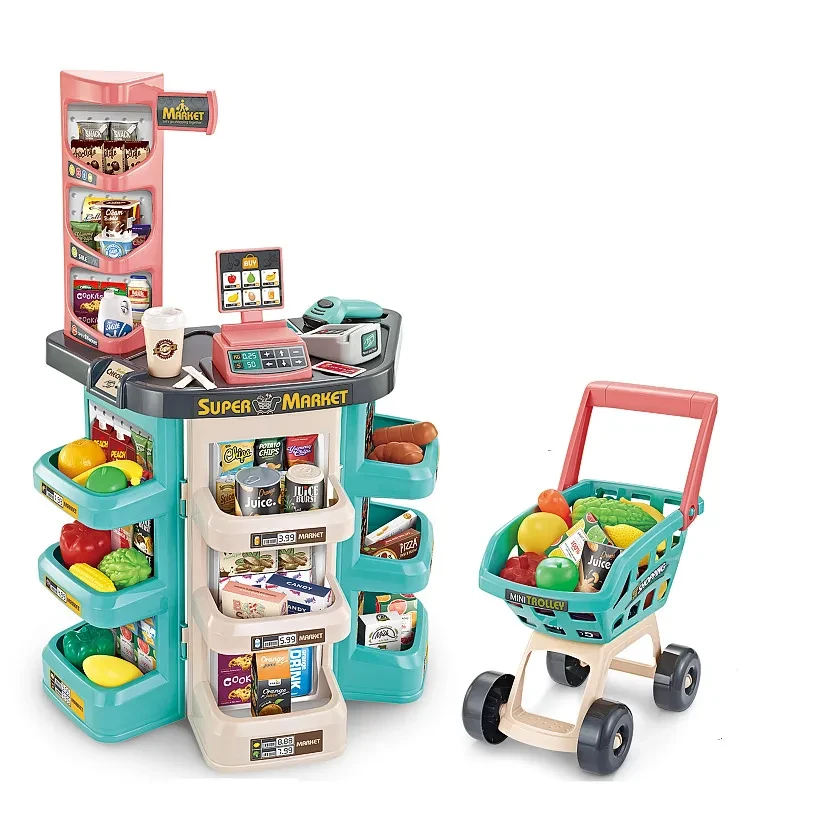
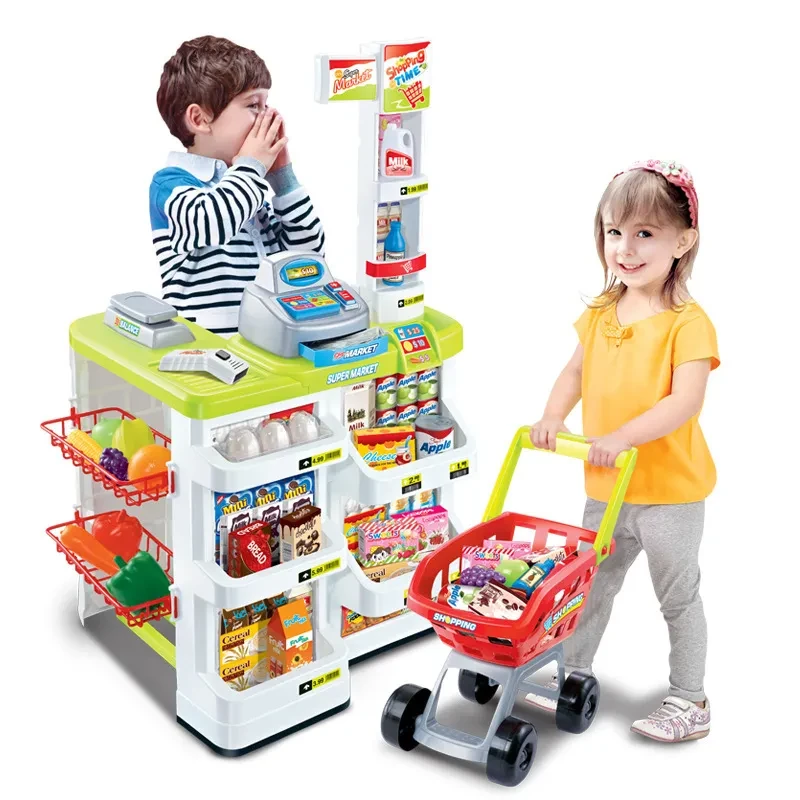
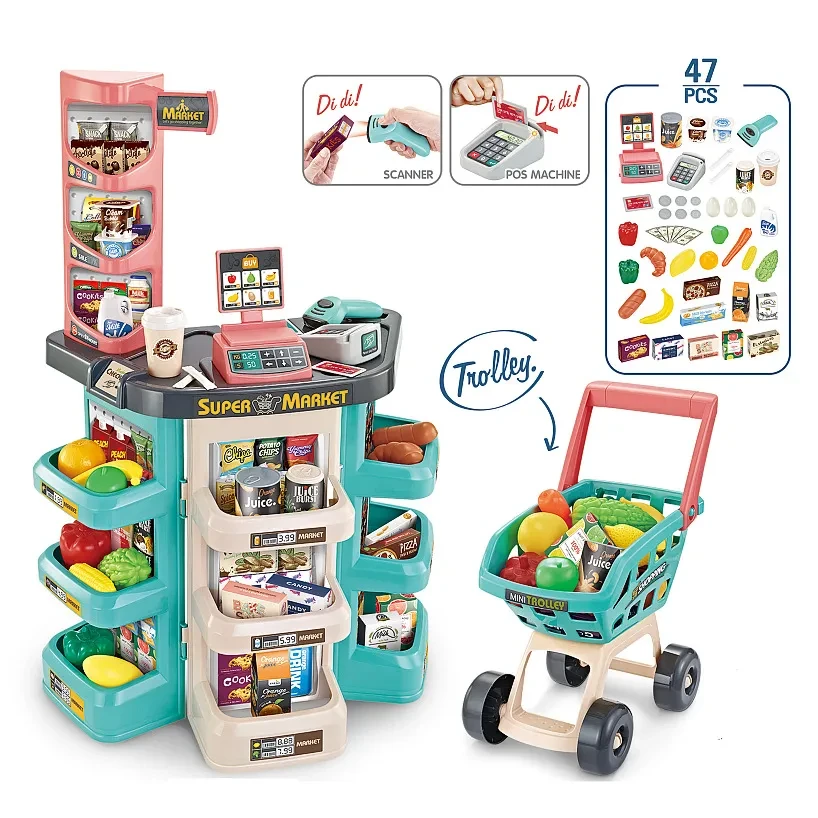
Toy Cash Register

Product information:
Ability Training: emotion, intelligence development, hand-brain, grasping, hand-eye coordination, other ability training, interactive toys,
parent-child communication, interest training
Color: 66876 charge scanner/POS machine 2.6kg,66877 charge scanner/POS machine 2.6kg,66805 supermarket combination charge scanner
2.6kg,66803 supermarket combination charge scanner 2.6kg,66878 charge scanner, cash register, POS machine 2.6kg,66879 real-time scanner,
cash register, POS machine 2.6kg
Applicable people: girls, boys
Features: supermarket trolley cash register
Applicable age: children (4-6 years old)
Toy material: plastic/plastic
Packing list:
Plastic toy sets×1
Product Image:
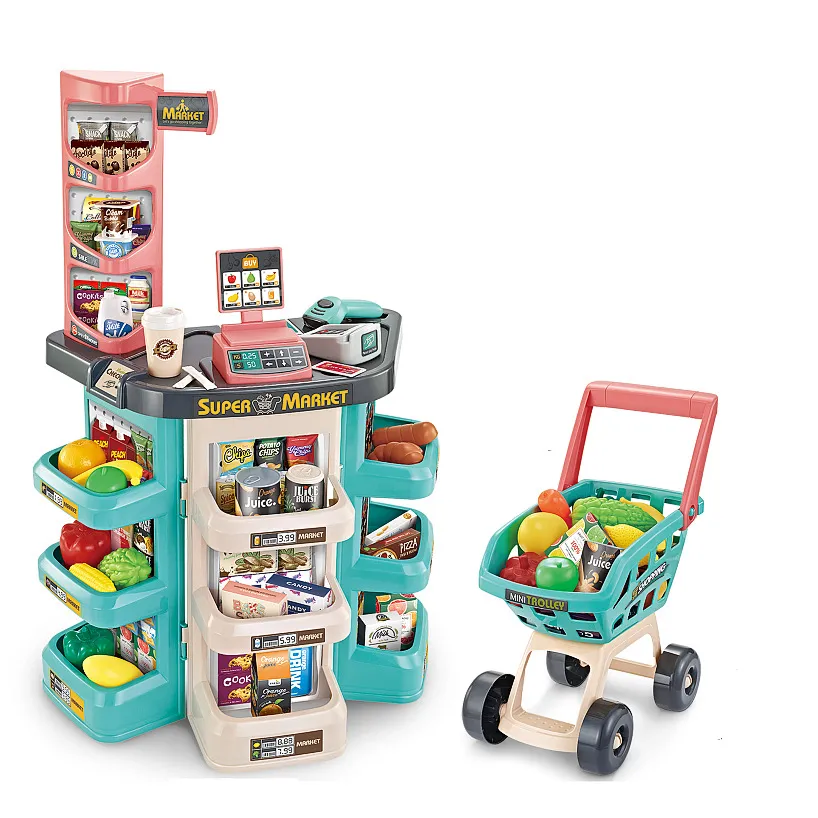
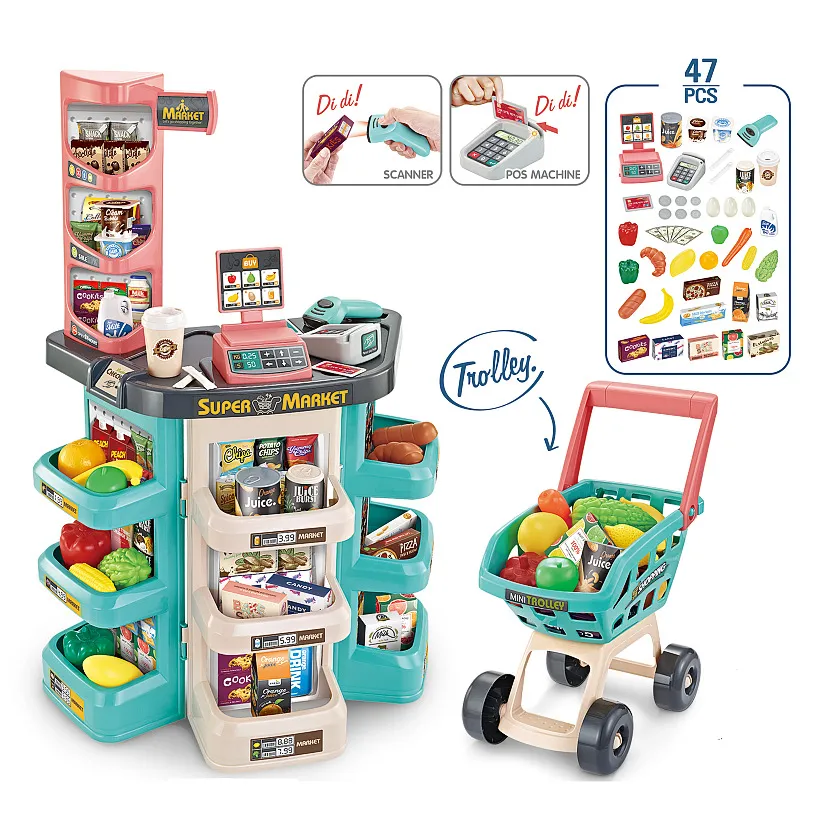
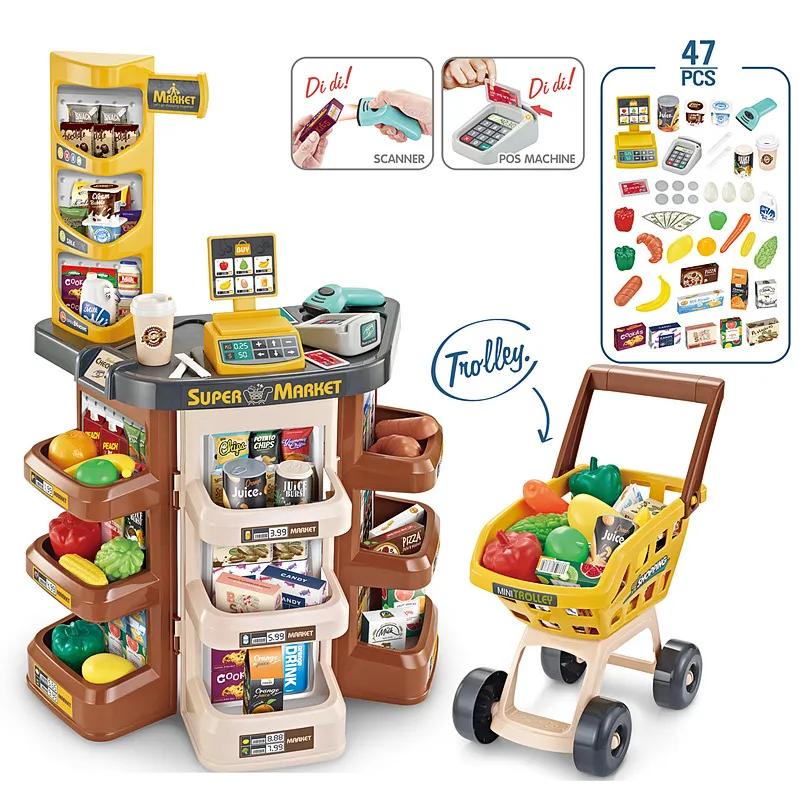
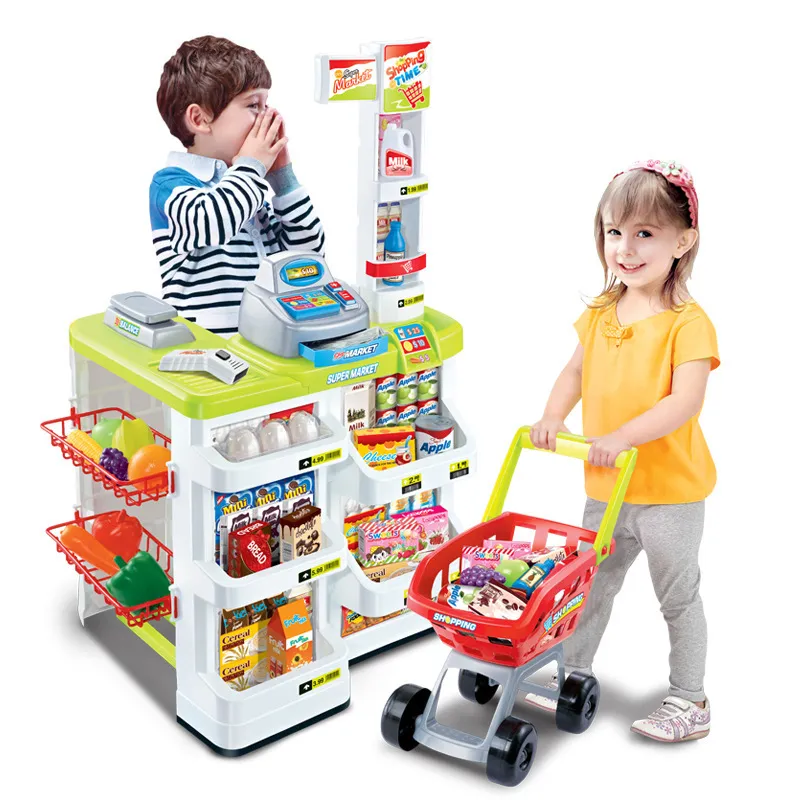
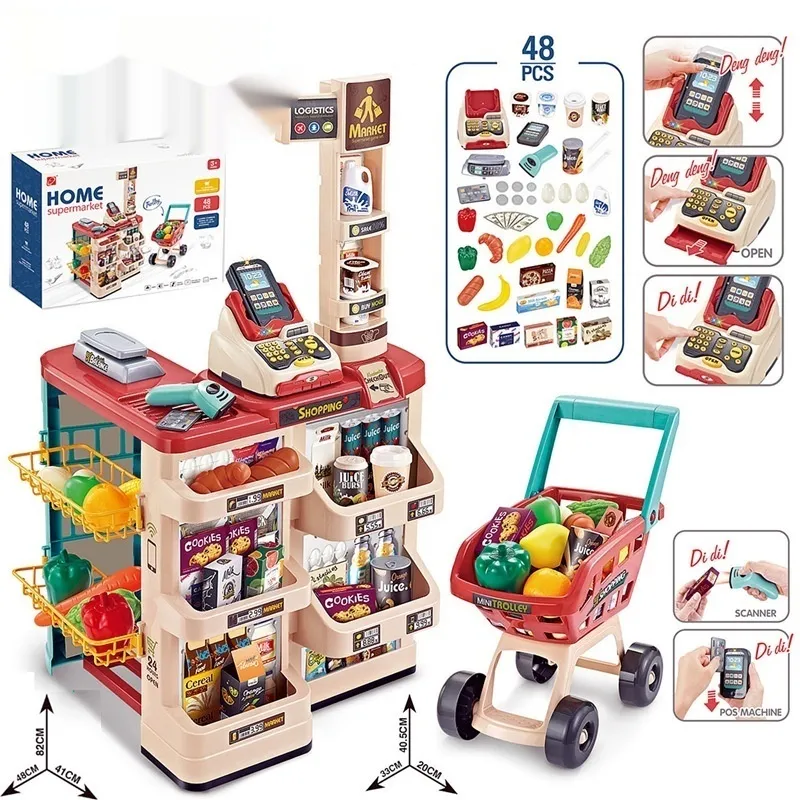
Toy Cash Register – Fun & Interactive Play for Kids
Perfect for Young Children Learning Numbers, Money Skills, and Social Play
A toy cash register is ideal for parents, caregivers, and educators in New Zealand who want to support early learning through interactive play. Designed for preschool and early school‑age children, this play‑based learning tool encourages number recognition, basic maths, social interaction, imaginative role‑play, and fine motor development. Whether used at home, in early childhood education centres, or as a gift for birthdays and holidays, a toy cash register brings hours of engaging educational play while building essential life skills in children.
Description – Toy Cash Register
A toy cash register is a child‑friendly replica of a real retail checkout machine, scaled and styled for young users. It typically includes tactile buttons, a pretend scanner, play money (coins and notes), a drawer that opens and closes, simple calculator functions, and sound or light features that imitate the experience of a real checkout. This combination of physical interaction and imaginative context transforms learning and play into a meaningful, hands‑on experience.
Constructed from durable, kid‑safe materials such as high‑quality plastic with smooth edges and bright colours, toy cash registers are built to withstand enthusiastic play sessions. Many models also include accessories like pretend credit cards, shopping baskets, item cards, and play food, enabling children to set up their own pretend shops or markets. Through role‑play, children learn fundamental skills such as counting money, recognising numbers, adding and subtracting, developing vocabulary related to shopping, and negotiating social interactions like taking turns and cooperative play.
Each toy cash register is designed with safety and developmental appropriateness in mind. Buttons are sized for little fingers, currencies are brightly coloured for easy differentiation, and interactive features like sound effects make learning engaging. Some advanced models even have voice prompts, sound effects that mimic real‑life checkout beeps, and simple arithmetic functions that reinforce early maths concepts.
In a New Zealand context—where play‑based learning is encouraged in early childhood settings and at home—a toy cash register offers both educational value and family‑friendly entertainment. Whether children are pretending to run their own dairy (corner store), supermarket, café, or market stall, the toy cash register supports key developmental milestones including cognitive skills, social‑emotional interaction, language development, numeracy understanding, and motor dexterity.
Key Points
Interactive Pretend Play Design:
A toy cash register replicates the experience of a real checkout machine, offering familiar interactive elements such as a number keypad,
scanner, money drawer, and sound or light cues. This design encourages imaginative scenarios and grounded play that reflect real‑world
shopping experiences.
Educational Value for Early Learning:
Toy cash registers support early numeracy skills such as counting, addition, subtraction, and simple money handling. Children can practise
counting play money, calculating totals, giving change, and recognising number symbols—skills that align with foundational early learning
goals in NZ.
Safe, Durable Construction:
Made from high‑quality, child‑safe materials, toy cash registers are built for repeated use and robust play. Rounded edges, non‑toxic
finishes, and sturdy parts ensure safety and longevity, making them suitable for everyday play at home or in early childhood centres.
Encourages Social Skills and Communication:
Playing with a toy cash register often involves role‑play scenarios where children take turns acting as cashier, customer, or shopkeeper.
These interactions promote language development, social negotiation, communication skills, patience, and collaborative play.
Benefits
Encourages Early Numeracy and Maths Confidence:
Toy cash registers help children understand early mathematical concepts including counting, sorting, recognising numbers, and performing
simple calculations. Play scenarios involving money handling support foundational numeracy skills in an engaging context.
Promotes Imaginative and Creative Play:
Role‑playing with a toy cash register allows children to create and explore imaginative worlds such as shops, markets, cafés, or service
counters. This kind of imaginative play enhances creativity, storytelling skills, and emotional expression.
Builds Social and Language Skills:
Children playing with peers or adults practice verbal communication, turn‑taking, question‑answer interactions, and collaborative
problem‑solving. These interactions help build social competencies and confidence in group settings.
Develops Motor Skills and Hand‑Eye Coordination:
Pressing buttons, handling play money, sliding a card, and opening the cash drawer all contribute to fine motor skill development. Children
refine hand‑eye coordination and dexterity through repeated, purposeful actions.
Suitable for Group and Independent Play:
A toy cash register can be enjoyed alone or with others. Solo play encourages self‑directed learning and focus, while group play nurtures
teamwork, empathy, and shared decision‑making.
Why Choose This Toy Cash Register?
Choosing this toy cash register means selecting a play‑based learning toy that blends education, engagement, and durability. Unlike simple electronic toys with limited interaction, a cash register that includes physical money, interactive buttons, and role‑play accessories creates multiple learning pathways through tactile, auditory, visual, and social engagement.
Many toy cash register sets include a complete set of accessories—coins, notes, scanner, baskets, and pretend item cards—so children can enact full shopping experiences. These extras increase replay value and expand the scope of play beyond a single function. They support various scenarios, from grocery shopping to market stalls, café checkouts, gift shops, and more.
The design of this toy cash register emphasises ease of use for young children: buttons are clearly labelled, features are intuitive, and safety is prioritised with non‑toxic materials and secure components. With colour‑coded money, meaningful sounds, and clear visual cues, children gain confidence as they explore functions independently or with adult guidance.
Additionally, by incorporating pretend money handling, this toy helps children become familiar with values and symbols that relate to real‑world money management. For educators and parents in New Zealand focused on early curriculum goals that include numeracy and social competence, this toy cash register aligns with learning outcomes while remaining fun and child‑centred.
Learning Through Play
The power of play in early childhood development is well recognised in New Zealand’s educational framework. Toy cash registers translate abstract skills into concrete play experiences. Through role‑play, children discover:
Number Recognition:
Identifying numerals on buttons, play money, and price tags helps reinforce symbol familiarity essential for later academic success.
Counting and Sorting:
Handling coins and notes encourages counting, grouping, and sequencing—pre‑math skills that support future mathematics learning.
Basic Money Management Concepts:
Children practise “buying” and “selling,” making change, and comparing values, providing a gentle introduction to financial literacy in a
safe and supportive context.
Verbal Communication:
Dialogue between “shopkeeper” and “customer” during play strengthens vocabulary related to money, goods, greetings, and polite discourse.
Collaborative Play:
Playing with siblings, peers, or adults nurtures perspective taking, cooperative turn‑taking, and shared decision‑making—skills transferable
to school readiness and social settings.
Real‑World Play Scenarios
Pretend Supermarket Checkout:
Children can set up aisles, label prices, scan items, total purchases, and handle pretend money—mirroring real supermarket experiences.
Café or Takeaway Role‑Play:
Pretend café scenarios encourage conversational interaction, menus, ordering, calculating totals, and making change, while exploring roles
like barista or customer.
Market Stall Play:
Creating a fruit and vegetable stand or craft booth helps children practise teamwork, sorting, negotiation, and transaction skills.
Birthday Party or Classroom Activity:
A toy cash register becomes a shared centre for collaborative play, encouraging social skills, shared storytelling, and inclusive
participation.
Inclusive Play & Family Bonding
One of the strongest benefits of a toy cash register is its capacity to bring people together. Parents and caregivers can join in play, modelling language, numeracy talk, and social behaviour. Through shared play:
• Adults can introduce counting concepts in playful contexts
• Children feel supported as they explore new ideas
• Siblings and peers develop cooperative strategies
• Play becomes a platform for confidence building
Inclusive play also allows children of different abilities to participate at their own pace. Button pressing, sorting coins by size or colour, and ‘customer’ and ‘shopkeeper’ roles can be adapted to suit varied developmental levels, ensuring that every child can engage meaningfully.
Safety, Materials, and Durability
Child safety is paramount in toys designed for young users. This toy cash register is constructed with:
• Non‑toxic, child‑safe plastics with smooth edges
• Impact‑resistant components for durability
• Secure battery compartments with safe closure
• Light weight design suitable for little hands
• Washable play accessories for hygiene maintenance
Durable materials ensure longevity through repeated play sessions, making this toy suitable for daily use at home or in early childhood education (ECE) settings. Reinforced buttons and secure play money pieces reduce the risk of breakage, and accessories are sized to prevent choking hazards.
How to Support Learning With the Cash Register
Parents, caregivers, and educators can extend the educational value of the toy cash register by:
1. Labeling Play Money:
Match play money to real NZ currency colours and values to reinforce real‑world familiarity.
2. Creating Price Tags:
Use simple price cards with numbers to encourage early number recognition and pricing concepts.
3. Play Dialogue Scripts:
Model conversational phrases (“Hello, how can I help?” “That’ll be $4, please.”) to support language development.
4. Counting Games:
Encourage children to count coins and notes, make ‘totals,’ and practise giving change to reinforce arithmetic.
5. Role Rotation:
Rotate roles between cashier, customer, bagger, and stocker to promote empathy and social dynamics.
6. Themed Play Days:
Set up seasonal or cultural markets, bakeries, or clothing shops to expand vocabulary and thematic learning.
Developmental Benefits by Age
Toddlers (2‑3 years):
Focus on button pressing, touching play money, naming colours, and basic counting.
Preschoolers (3‑5 years):
Introduce simple addition, pretend transactions, number recognition, and role‑play language.
Early School Age (5‑7 years):
Extend play to include calculation of totals, making change, reading price tags, and cooperative play dynamics.
Long‑Term Play Value
This toy cash register isn’t just a one‑time plaything; it’s a developmental tool that grows with children. It supports:
• Emergent numeracy skills that prepare children for school
• Language and communication skills needed in social settings
• Social‑emotional growth through collaborative play
• Confidence and independence as children lead play scenarios
Because it can be used at multiple developmental stages and in different learning contexts—home, school, holiday play—it delivers long‑term value and ongoing engagement.
Conclusion
A toy cash register is an engaging, educational, and versatile play tool that supports early learning, imaginative play, and social interaction for children in New Zealand. With its combination of tactile interaction, role‑play scenarios, and learning‑oriented features, it enhances numeracy skills, communication abilities, motor development, and creativity. Whether gifted to a child, incorporated into home learning routines, or used in an early childhood centre, this toy cash register delivers meaningful play that inspires curiosity and confidence.
Investing in a toy that encourages learning through play means supporting foundational developmental goals in ways that are enjoyable, safe, and adaptable. Child‑focused design, durable construction, and rich play possibilities make this toy cash register a valuable addition to any child’s toy collection. It brings joy, interaction, and learning together in a way that nurtures young minds and strengthens family and peer bonds through shared experiences.
The product may be provided by a different brand of comparable quality.
The actual product may vary slightly from the image shown.
Shop amazing plants at The Node – a top destination for plant lovers
.png)








.jpg)








.jpg)



.jpeg)




.jpeg)

.jpeg)







.jpeg)

.jpeg)

.jpeg)
.jpeg)

.jpeg)




.jpeg)
.jpg)
.jpeg)




.jpeg)
.jpeg)

.jpeg)





.jpeg)

.jpeg)

.jpeg)

.jpeg)

.jpeg)





.jpeg)
.jpeg)
.jpeg)


.jpeg)


.jpeg)


.jpg)
.jpeg)



.jpg)

ulva-Logo.jpg)



.jpeg)



.png)











.png)