

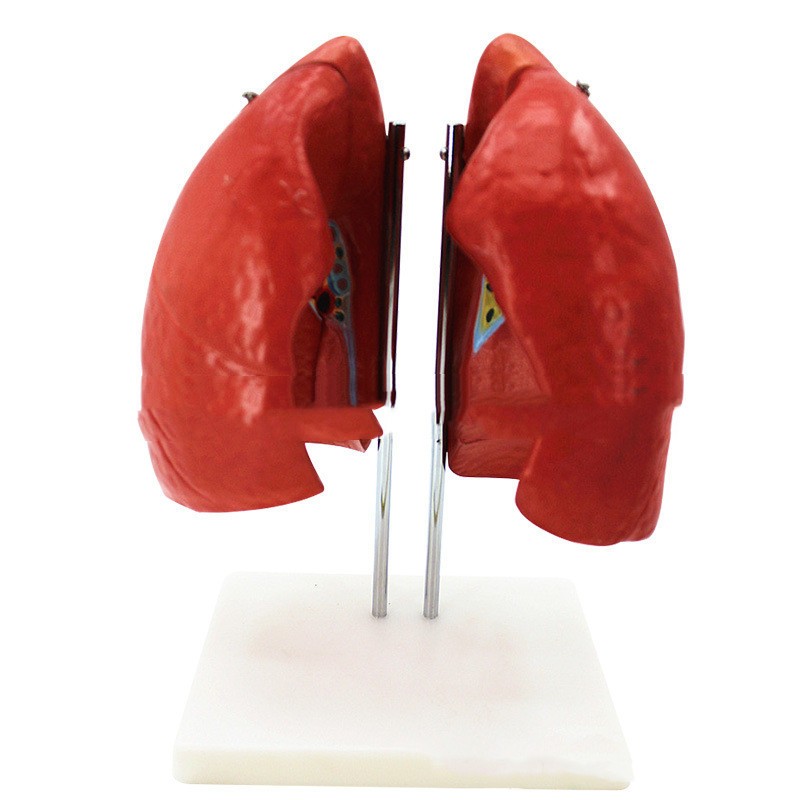
Lung Anatomical Model Lung Segment Model Respiratory System Model

Product information:
Product name: Lung anatomical model
Size: 16*20*31cm
Material: environmentally friendly PVC hand painted
Model use: It is a rare visual teaching aid for lung anatomy learning and demonstration model medical teaching by accurately depicting the
various functional areas of the lungs
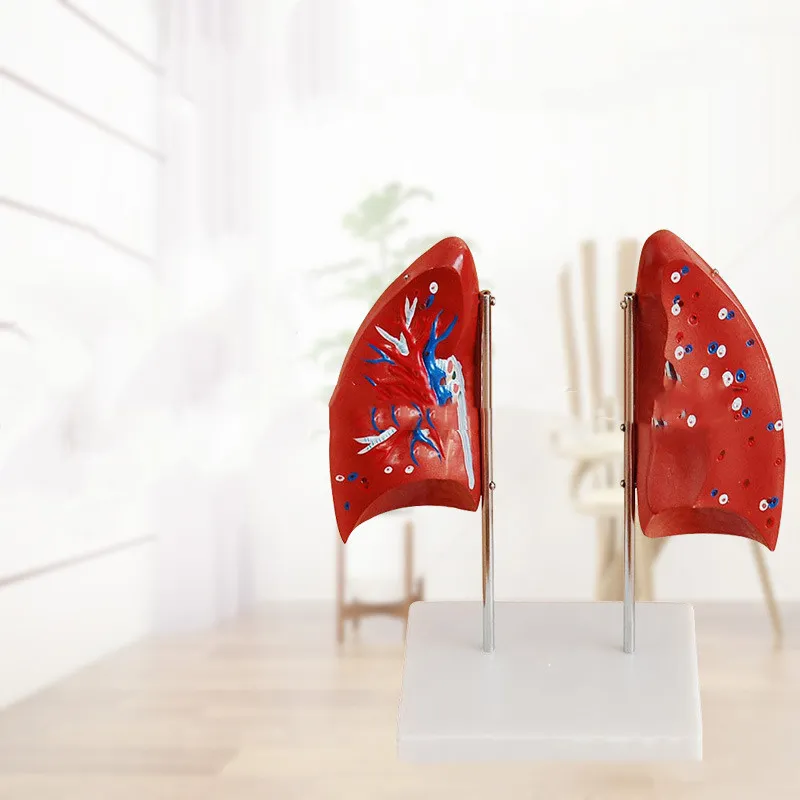
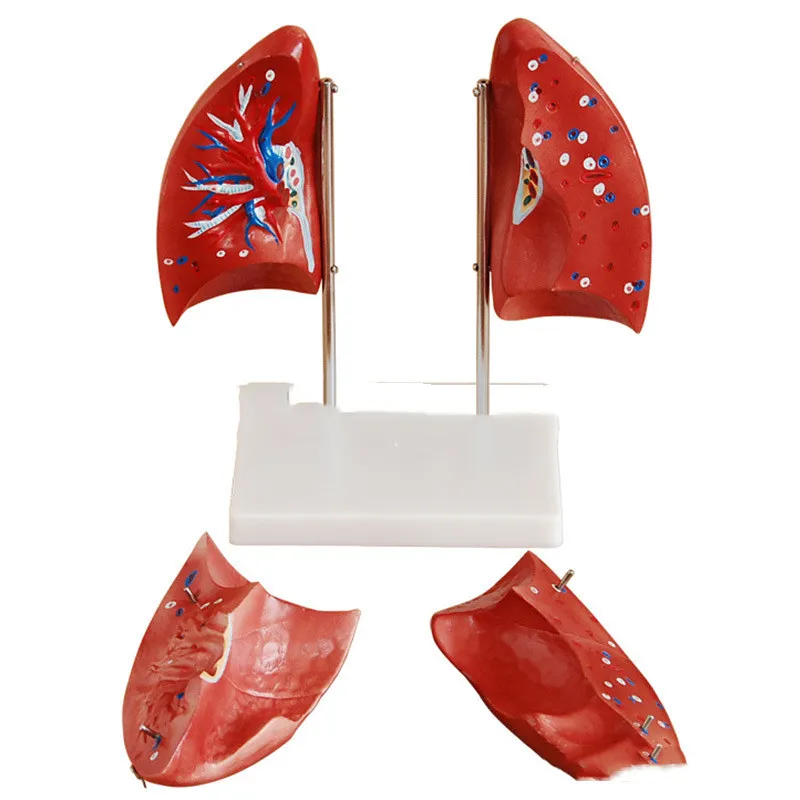
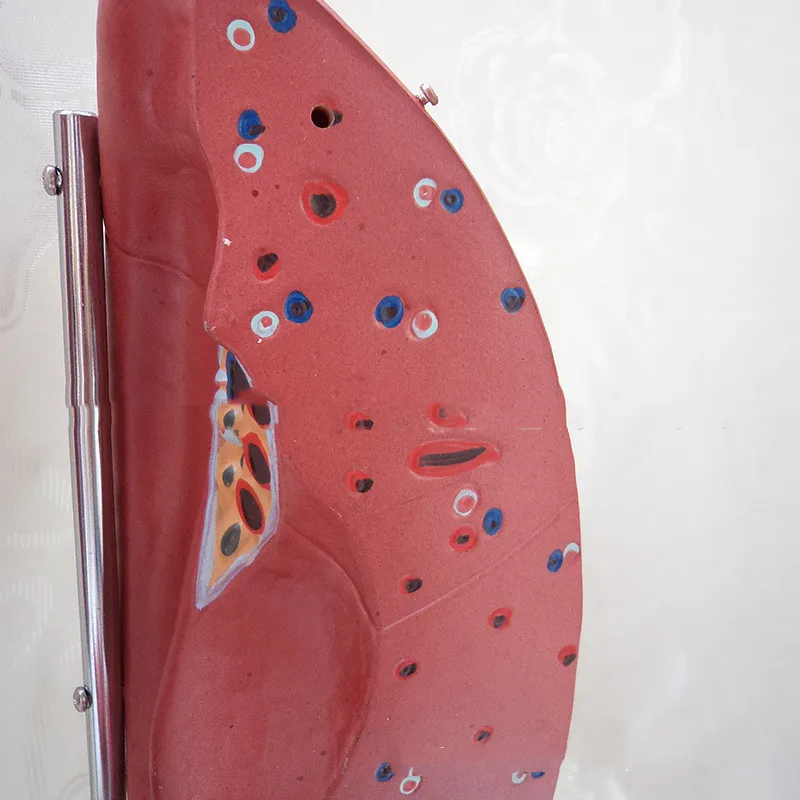
Lung Anatomical Model Lung Segment Model Respiratory System Model – Detailed Educational Anatomy Display
Perfect for Medical Education, Biology Classes, Anatomy Study, Healthcare Training, and Science Demonstrations
The Lung Anatomical Model Lung Segment Model Respiratory System Model is designed to provide a clear and accurate representation of the human respiratory system. This educational model helps students, teachers, and medical professionals visualize the structure and function of the lungs and their internal segments.
Understanding human anatomy can be challenging when relying only on diagrams or textbooks. A physical anatomical model provides a three-dimensional learning experience that makes it easier to identify structures and understand how different parts of the respiratory system interact.
Whether used in classrooms, medical training environments, laboratories, or personal study, this model helps enhance anatomical education by offering a detailed visual reference for the human lung structure.
Description – Lung Anatomical Model Lung Segment Model Respiratory System Model
The Lung Anatomical Model Lung Segment Model Respiratory System Model is an educational tool designed to illustrate the internal structure of the lungs and the respiratory system. The model typically displays the major components of the lungs, including lobes, bronchi, and bronchial segments.
This anatomical representation helps learners understand how air travels through the respiratory system from the trachea into the bronchial branches and ultimately into the lungs.
One of the key advantages of a physical anatomical model is the three-dimensional visualization it provides. While textbooks show flat illustrations, a 3D model allows students to examine structures from multiple angles.
The lung model usually highlights different anatomical regions using color-coded sections. This helps users distinguish between lung lobes, bronchial pathways, and surrounding structures more easily.
The model may also show bronchial tree branching, which represents how airways divide as they extend deeper into the lungs. This branching structure is essential for understanding how oxygen reaches different areas of the lungs.
Educational anatomy models are commonly used in medical schools, biology classrooms, and training environments where visual learning plays an important role in understanding human body systems.
Another benefit of this model is its ability to support interactive teaching. Instructors can point to specific structures during lessons, helping students connect theoretical knowledge with physical anatomy.
The model is typically mounted on a base that allows it to stand upright for clear viewing. This design makes it suitable for demonstration during lectures or for display in classrooms and laboratories.
Because the lung model focuses on anatomical accuracy, it helps learners identify important structures such as lung lobes, bronchi, bronchioles, and airway segments.
Medical students may use such models to better understand respiratory physiology and anatomical relationships between different structures within the chest cavity.
Another advantage is that anatomical models help reinforce memory through visual learning. Seeing and touching a model often improves retention compared to reading alone.
The model is also useful for patient education. Healthcare professionals may use anatomical models to explain respiratory conditions or procedures in a clear and understandable way.
Durable construction materials help ensure that the model can be used repeatedly in classroom or training environments.
Many models are made from strong educational-grade materials that maintain shape and structural detail over time.
Because the model is portable and compact, it can easily be moved between classrooms, training rooms, or medical offices.
The Lung Anatomical Model Lung Segment Model Respiratory System Model serves as a valuable visual aid that helps simplify complex anatomical structures and improve learning experiences.
Key Points
Detailed Lung Structure Representation
Displays lung lobes, bronchial pathways, and respiratory segments.
Three-Dimensional Learning Tool
Allows viewing from multiple angles for better anatomical understanding.
Color-Coded Educational Design
Different sections highlight various lung components.
Stable Display Base
Allows easy classroom demonstration and viewing.
Benefits
Improves Anatomy Learning
Helps students visualize lung structure more effectively.
Supports Medical Training
Useful for healthcare education and respiratory system study.
Enhances Classroom Demonstrations
Allows teachers to explain anatomy clearly using physical models.
Reinforces Visual Memory
3D models help improve retention of anatomical information.
Why Choose This Lung Anatomical Model Lung Segment Model Respiratory System Model?
The Lung Anatomical Model Lung Segment Model Respiratory System Model offers a practical and effective tool for studying the respiratory system. Its detailed structure and three-dimensional design allow learners to explore lung anatomy in a more interactive and engaging way.
Unlike flat diagrams, this model provides a physical representation that improves comprehension of how different respiratory structures connect and function.
For educators, students, and healthcare professionals seeking a clear visual reference for lung anatomy, this model provides a reliable and informative learning aid.
Conclusion
The Lung Anatomical Model Lung Segment Model Respiratory System Model is an educational tool designed to simplify the study of lung anatomy and respiratory structures. With its detailed design, color-coded sections, and three-dimensional format, it supports effective learning and teaching of the human respiratory system.
Whether used in classrooms, medical training programs, or health education settings, this model helps make complex anatomy easier to understand and visualize.
The product may be provided by a different brand of comparable quality.
The actual product may vary slightly from the image shown.
Shop amazing plants at The Node – a top destination for plant lovers

.png)












.jpg)









.jpg)





.jpeg)





.jpeg)



.jpeg)








.jpeg)



.jpeg)

.jpeg)

.jpeg)

.jpeg)




.jpeg)
.jpg)

.jpeg)






.jpeg)
.jpeg)



.jpeg)





.jpeg)


.jpeg)

.jpeg)

.jpeg)

.jpeg)







.jpeg)
.jpeg)
.jpeg)





.jpeg)



.jpeg)




.jpg)
.jpeg)









.jpg)


ulva-Logo.jpg)




.jpeg)



.png)















.png)