
Low Temperature Stirling Engine

Perfect for students, educators, science enthusiasts, and anyone interested in understanding fundamental thermodynamics through a working mechanical model.
The Low Temperature Stirling Engine is designed as a physical experiment and popular science demonstration model that visually explains the principles of external combustion engines. Ideal for classrooms, laboratories, home education, and science displays, this engine converts small temperature differences into mechanical motion. Well suited to New Zealand learning environments that value practical, hands-on STEM education, it provides a clear and engaging way to explore physics concepts through observation and experimentation.
Description – Low Temperature Stirling Engine
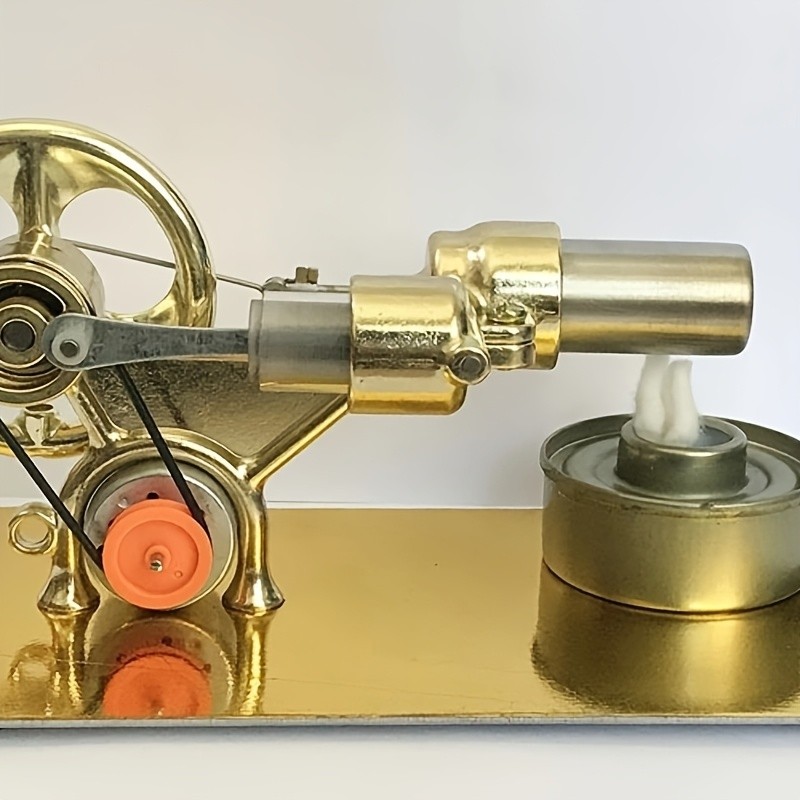
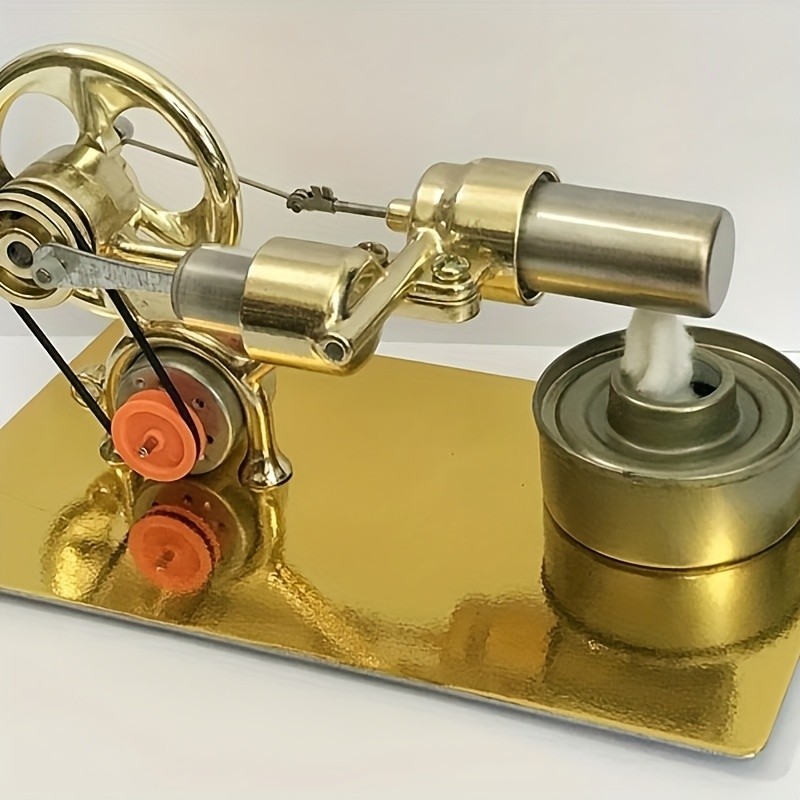
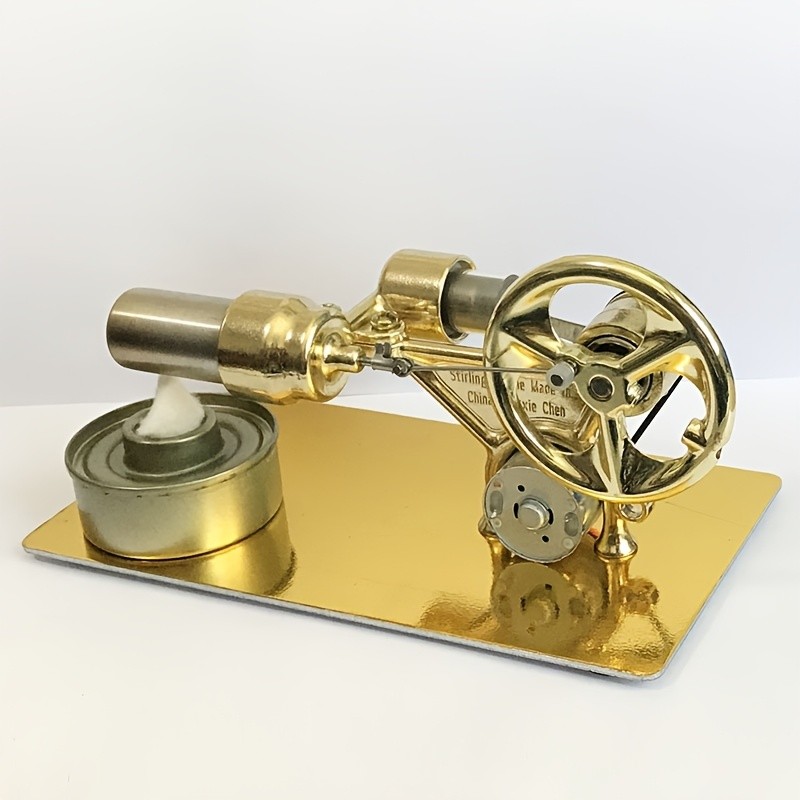
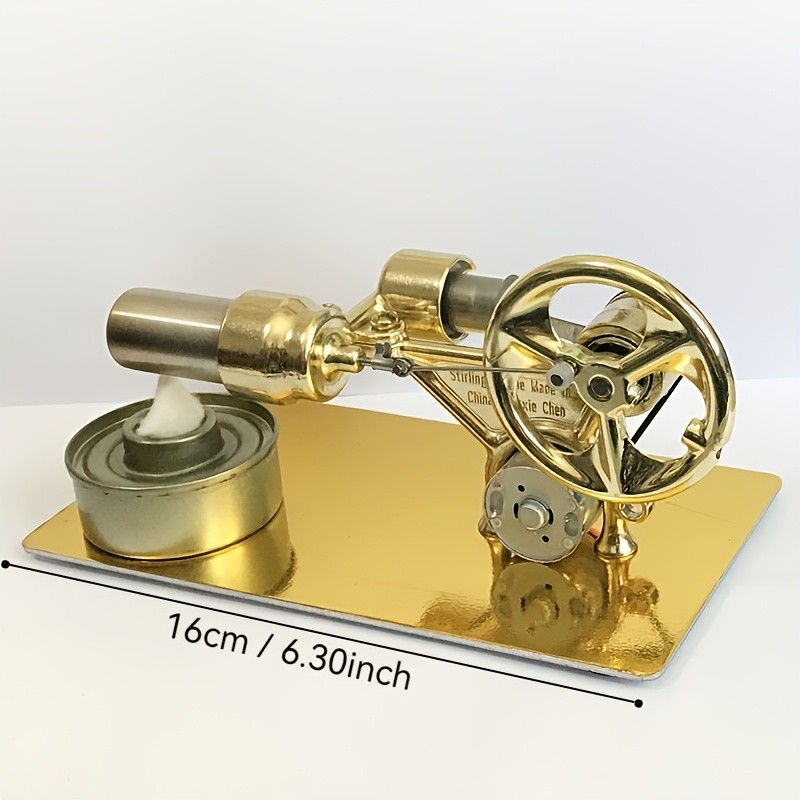
The Low Temperature Stirling Engine is a compact steam-engine-style model that operates on the principle of external combustion and heat transfer. Unlike internal combustion engines, it uses an external heat source and a temperature gradient to drive motion, making it safe and suitable for educational demonstration.
Designed for low-temperature operation, the engine can run using simple heat sources, allowing users to observe real mechanical movement generated from thermal energy. This makes it an excellent tool for illustrating energy conversion, pressure changes, and cyclic motion in physics and engineering studies.
Detailed Product Description
The Low Temperature Stirling Engine is engineered to demonstrate the core principles of thermodynamics and mechanical energy conversion in a visible and understandable way. Its structure is designed for clarity, allowing users to see each component in motion as the engine operates.
External Combustion & Heat Transfer
This engine operates using external heat rather than internal fuel combustion. When a temperature difference is applied between the hot and cold sides of the engine, gas inside expands and contracts in a controlled cycle. This movement drives the piston and flywheel, producing continuous rotational motion.
Low Temperature Operation
Unlike traditional steam engines that require high heat or pressure, this Stirling engine is designed to run at relatively low temperatures. This makes it suitable for classroom demonstrations, lab experiments, and home learning environments where safety and simplicity are important.
Visible Mechanical Components
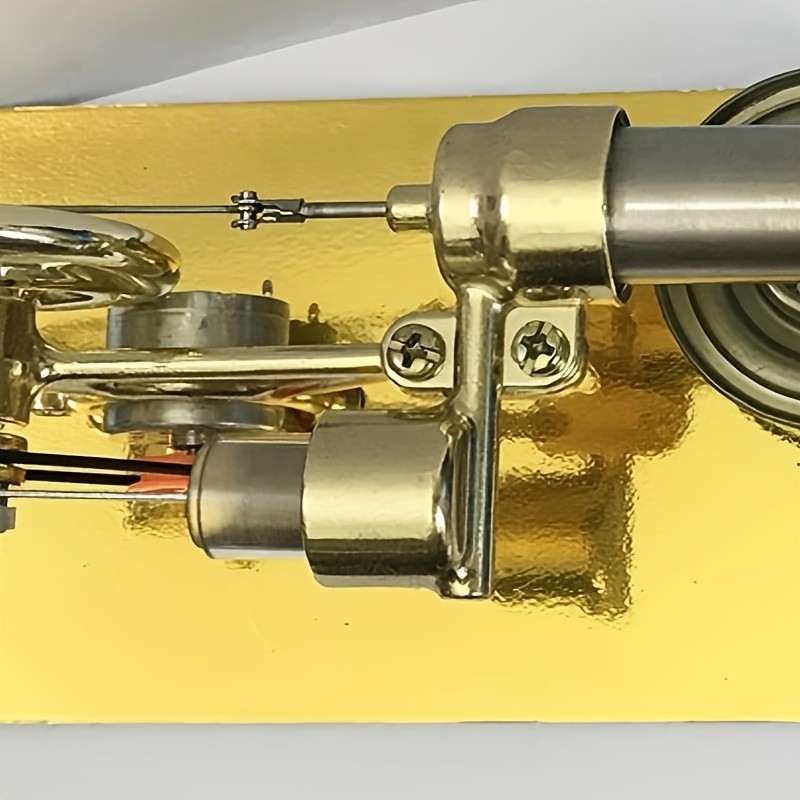
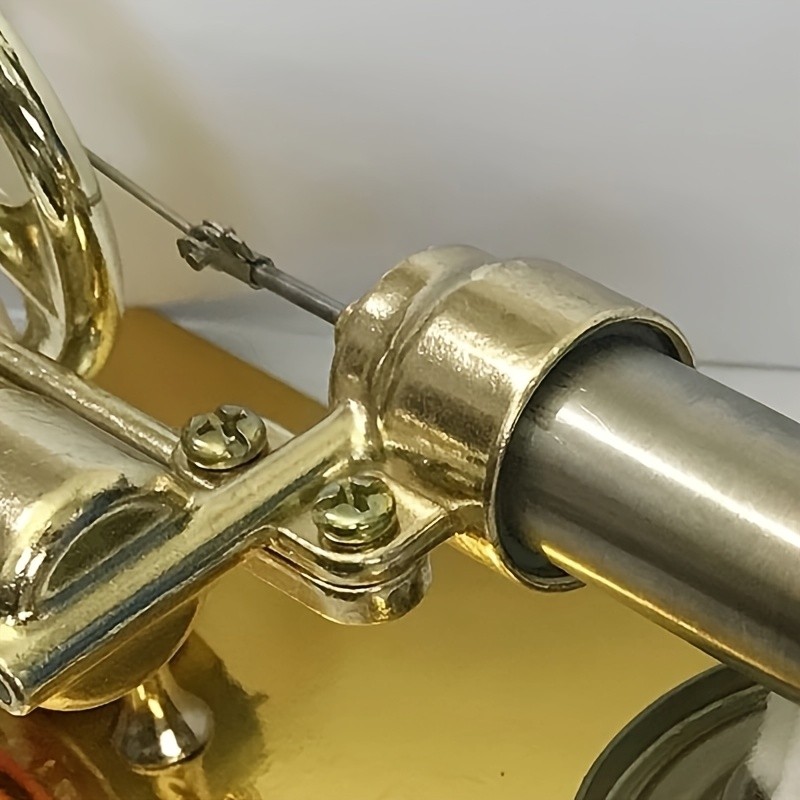
Key components such as the flywheel, piston, and connecting rods are exposed for easy observation. This open design helps learners understand how linear motion is converted into rotational motion and how each part contributes to the engine’s operation.
Educational & Experimental Use
The engine supports a wide range of learning objectives, including:
- Demonstrating energy conversion from heat to mechanical work
- Exploring pressure and volume changes in gases
- Understanding cyclic motion and mechanical linkage
- Supporting STEM education and physics experiments
Popular Science & Display Model
In addition to hands-on experiments, the Low Temperature Stirling Engine also functions as a popular science display. Its smooth operation and classic mechanical appearance make it suitable for desks, shelves, classrooms, and science exhibitions.
Durable Construction
The engine is constructed from metal and heat-resistant components designed to withstand repeated demonstrations. Its stable base helps ensure smooth operation during experiments and reduces vibration.
In New Zealand educational settings, where practical learning and interactive science demonstrations are encouraged, this model provides a reliable and engaging way to bring abstract physics concepts to life.
Key Points
Low Temperature Stirling Engine Design: Operates using small temperature differences.
External Combustion Principle: Demonstrates heat-to-motion energy conversion safely.
Visible Mechanical Structure: Allows clear observation of engine operation.
Educational Science Model: Suitable for labs, classrooms, and home learning.
Benefits
Enhances STEM Learning: Makes abstract physics concepts easier to understand.
Hands-On Experimentation: Encourages curiosity through real mechanical motion.
Safe Demonstration Model: Low temperature operation suitable for educational use.
Versatile Use: Functions as both a teaching tool and a science display piece.
Why Choose This Low Temperature Stirling Engine?
This model stands out because it offers a real, working engine that operates safely at low temperatures, making it ideal for education and experimentation. Rather than relying on diagrams or videos, learners can directly observe how heat energy is converted into mechanical motion.
Its external combustion design and visible components provide a clear advantage for teaching thermodynamics, mechanical linkage, and energy cycles. The balance of educational value and visual appeal makes it suitable for both formal learning environments and personal exploration.
For educators, students, and science enthusiasts seeking a practical way to demonstrate physics principles, this Stirling engine offers clarity, reliability, and engagement.
Conclusion
The Low Temperature Stirling Engine is an effective educational model designed to demonstrate external combustion and energy conversion through real mechanical motion. With its low-temperature operation, visible components, and durable construction, it supports hands-on learning in classrooms, labs, and home environments.
Ideal for New Zealand STEM education, science demonstrations, and popular science displays, this engine transforms theoretical concepts into tangible understanding. Informative, engaging, and visually compelling, it is a valuable addition to any science learning setup.
The product may be provided by a different brand of comparable quality.
The actual product may vary slightly from the image shown.
Shop amazing plants at The Node – a top destination for plant lovers

.png)









.jpg)







.jpg)





.jpeg)





.jpeg)



.jpeg)







.jpeg)



.jpeg)

.jpeg)

.jpeg)

.jpeg)



.jpeg)
.jpg)

.jpeg)






.jpeg)
.jpeg)



.jpeg)





.jpeg)


.jpeg)

.jpeg)

.jpeg)

.jpeg)





.jpeg)
.jpeg)
.jpeg)



.jpeg)



.jpeg)


.jpg)
.jpeg)







.jpg)

ulva-Logo.jpg)



.jpeg)


.png)















.png)