

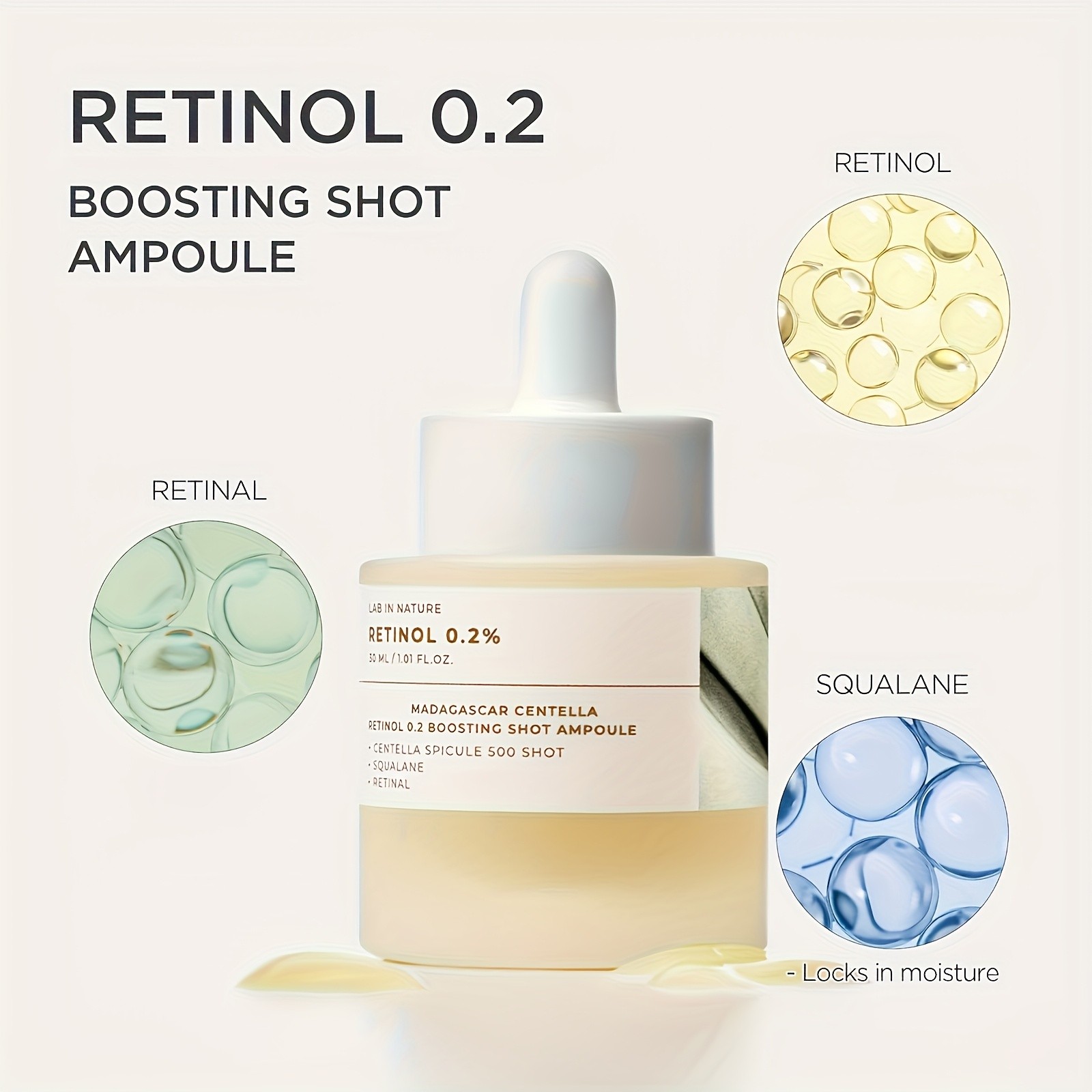
2 pcs Lab in Nature Retinol 0.2% Boosting Shot Ampoule (Madagascar Centella) 30ml — Retinol + Retinal + Squalane, “Spicule 500 Shot” Delivery, Smoother-Looking Texture & Radiance

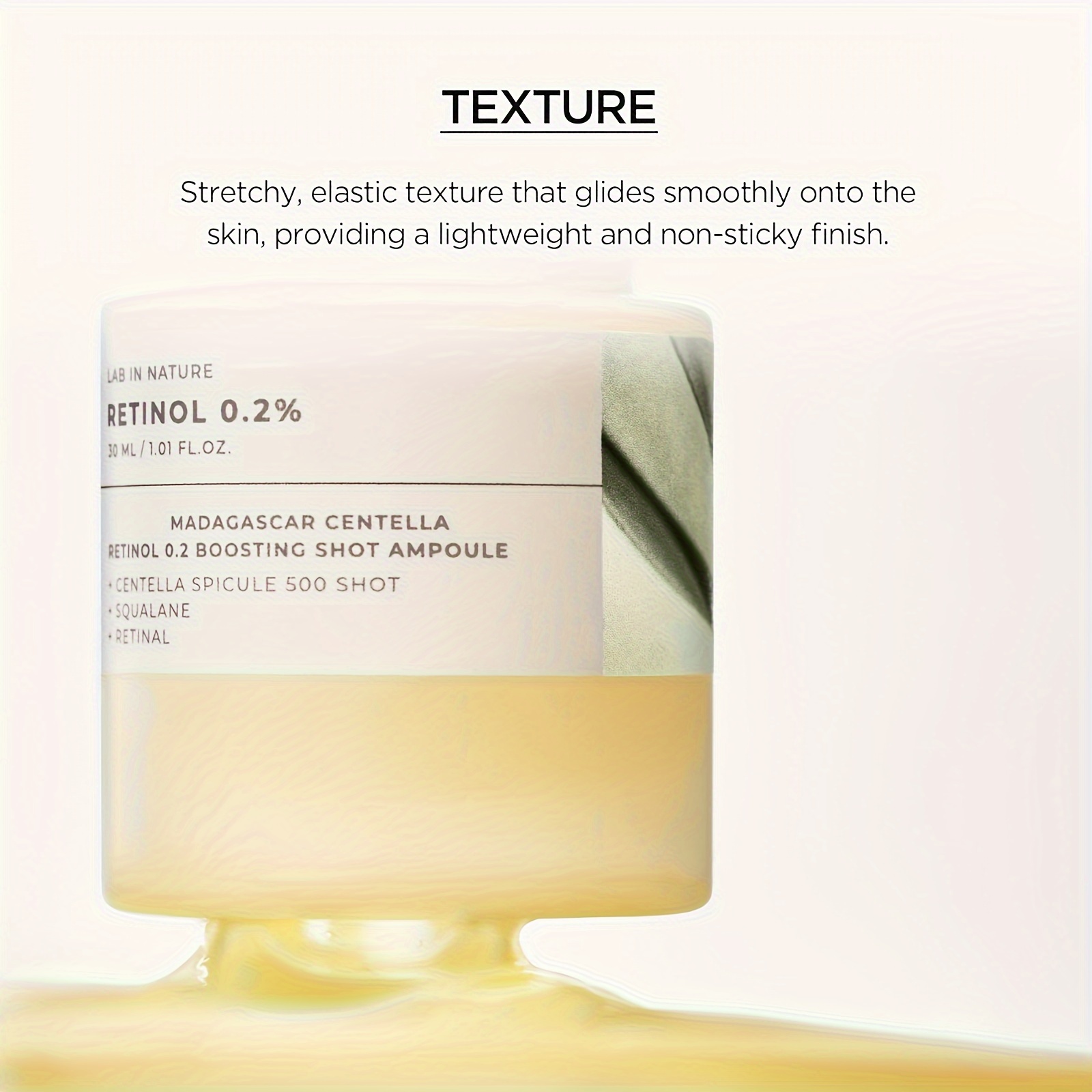
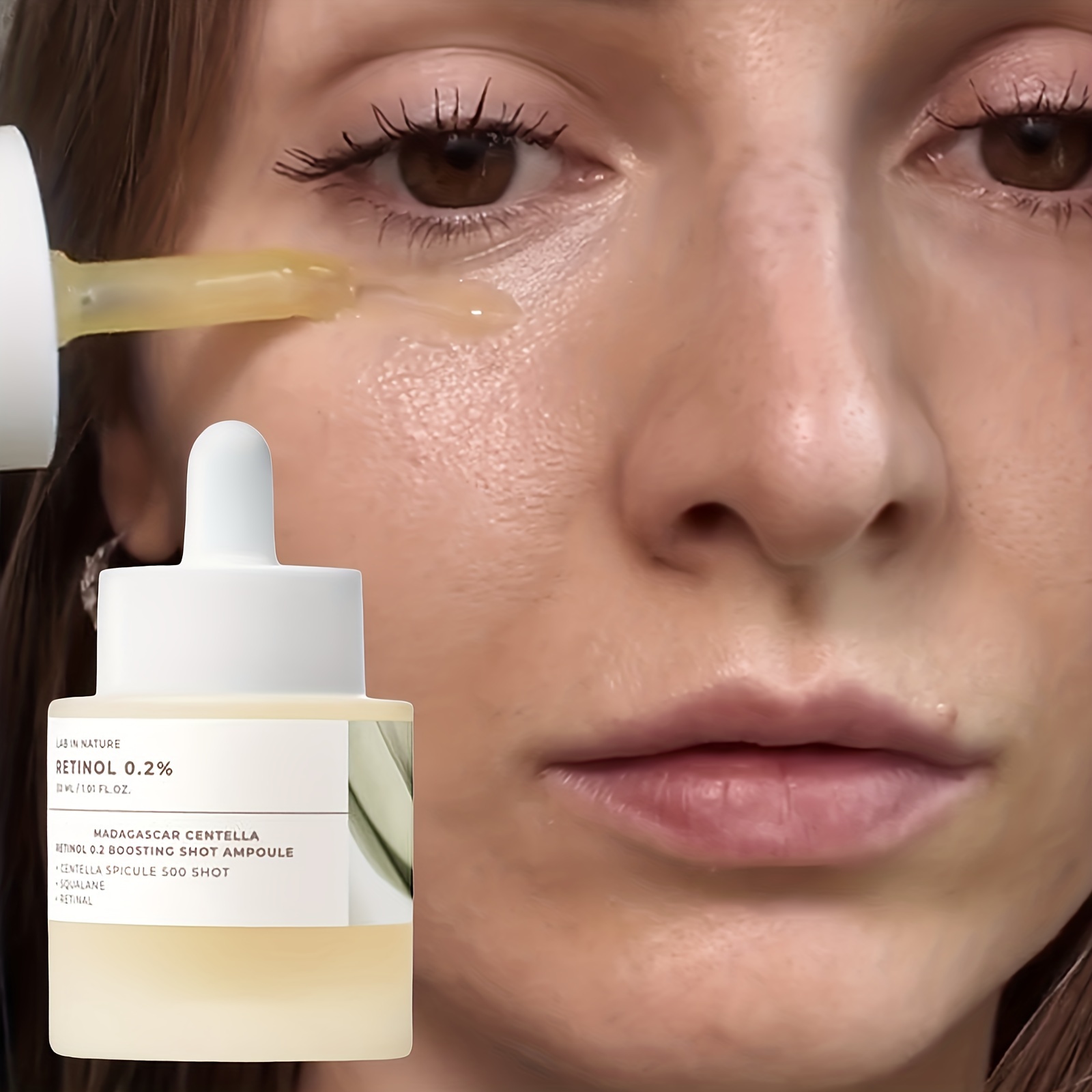
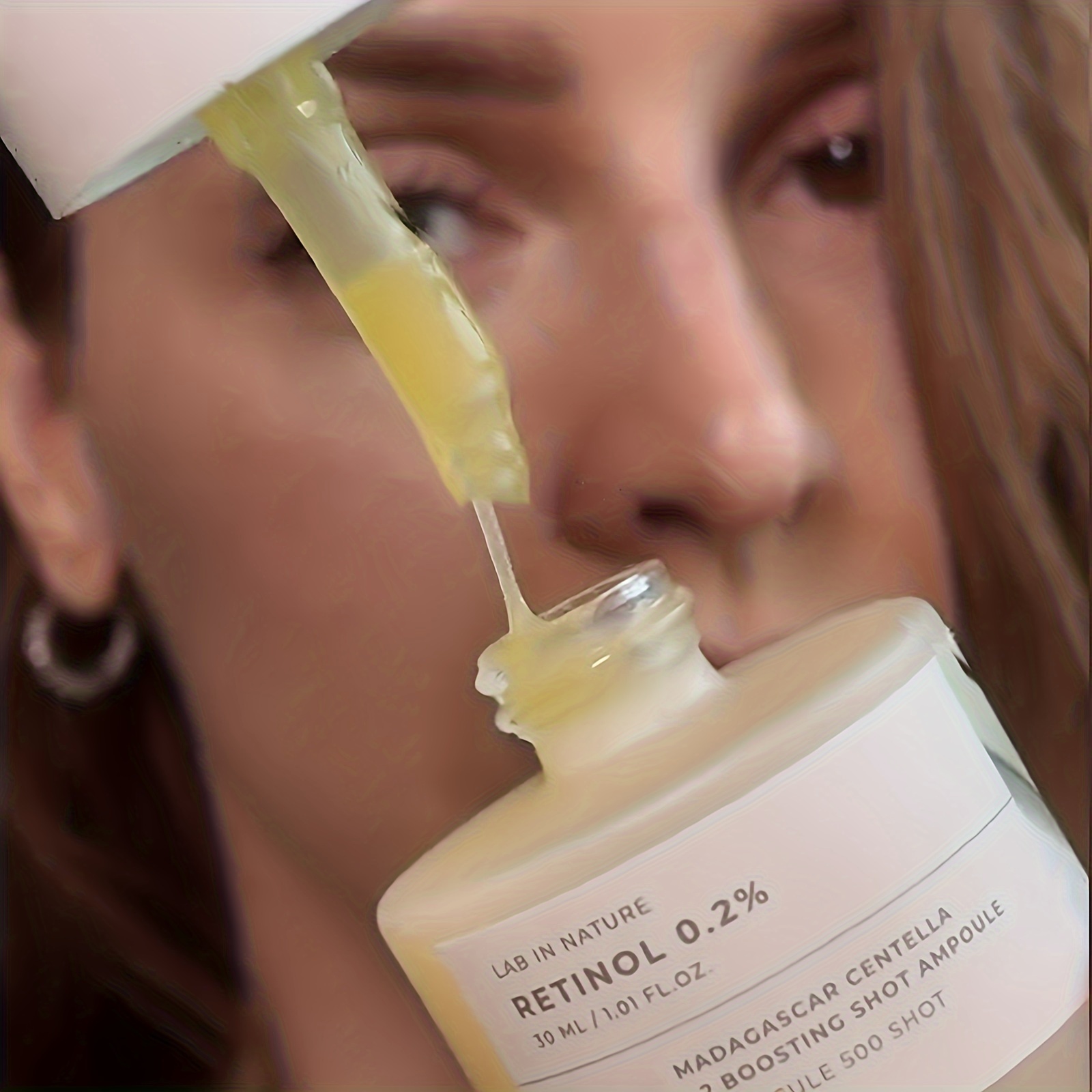
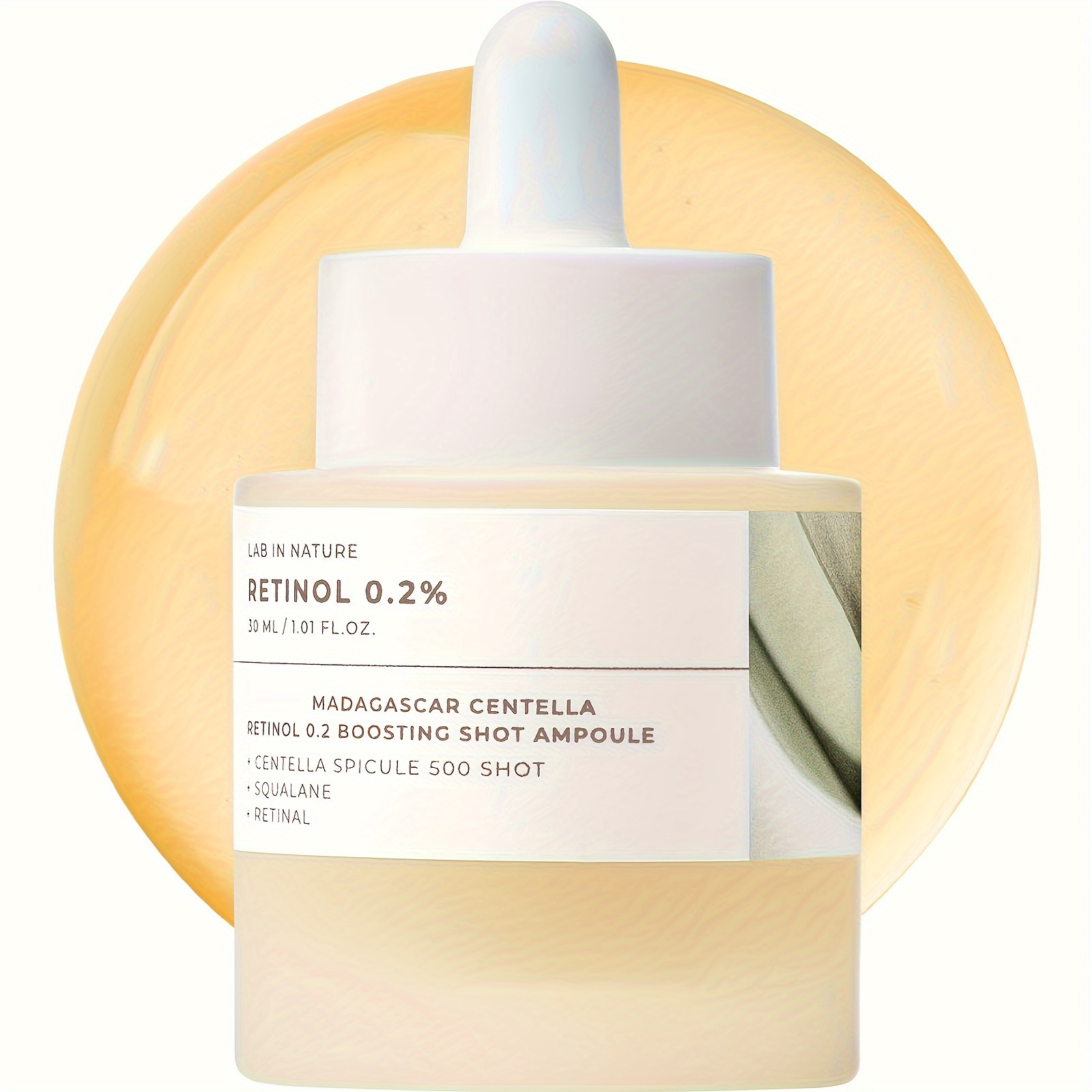
Meet the nightly “reset” step designed for people who want visible skin refinement without turning their routine into a complicated project. Lab in Nature Retinol 0.2% Boosting Shot Ampoule (also labeled Madagascar Centella Retinol 0.2 Boosting Shot Ampoule, 30ml / 1.01 fl. oz.) is a targeted treatment ampoule built around a modern, results-driven trio: Retinol (0.2%) + Retinal + Squalane, supported by Centella and a distinctive “Centella Spicule 500 Shot” concept intended to help the formula feel more “performance” than a standard retinol serum.
This is the kind of product you reach for when your goals include smoother-looking texture, more even-looking tone, softened appearance of fine lines, and that clearer, more polished “skin looks well-rested” finish—but you still want a formula that respects hydration and comfort. Retinoids are well known for their ability to improve how skin looks over time, yet many people stop using retinol because their skin gets dry, flaky, or sensitive. This ampoule is positioned to reduce that friction by pairing retinoids with squalane (to help lock in moisture) and Centella (often chosen in skincare for a calmer, comfort-first feel).
If you have been curious about retinol but cautious, the 0.2% retinol concentration sits in a commonly used “serious, but not extreme” category. It is more purposeful than beginner micro-doses, yet still very manageable for many users when introduced correctly. The presence of retinal (a retinoid one conversion step closer to the active form than retinol) is another signal that this is designed to be more than a basic anti-aging serum. The result is an ampoule that can function as a texture-and-radiance booster in a structured, sustainable routine.
Important note for responsible use: retinoids are powerful cosmetic ingredients and require good habits—especially night-time use, gradual introduction, and daily sunscreen. This product description focuses on cosmetic outcomes (how skin looks and feels) and routine guidance, not medical treatment claims.
Why retinoids are the gold standard for “skin looks better” goals (and how retinol + retinal fits)
If there is one category of ingredients that consistently shows up in “best skincare for texture, tone, and fine lines” discussions, it is retinoids. Retinoids are vitamin A derivatives used in skincare because they help support skin renewal and improve the look of multiple visible concerns at once: dullness, rough texture, uneven tone, visible pores, and early signs of aging.
Retinol: the classic, reliable workhorse
Retinol is widely used because it is effective and broadly tolerated when used correctly. In cosmetic skincare, retinol is not “instant.” Instead, it performs through consistency. Many people notice that retinol makes skin look:
- Smoother (because surface texture appears refined over time)
- Brighter (because dullness often improves as the routine becomes consistent)
- More even (because the appearance of uneven tone and post-blemish marks can soften)
- More firm and refreshed (as skin appears more resilient)
Retinol does not act as a one-night miracle. It is a compounding benefit ingredient: the result is usually a gradual change that adds up. If you want long-term improvement rather than a temporary “glow,” retinol is a strategic choice.
Retinal: the “booster” retinoid that elevates the formula
Retinal (also called retinaldehyde) is a retinoid that sits closer to the active form (retinoic acid) than retinol in the conversion pathway. In practical terms, it is often positioned as a “stronger-per-drop” retinoid than retinol, because it needs fewer conversion steps in the skin.
That does not mean it is automatically harsh. It means the formula can be designed to feel more “high impact” at a relatively modest retinol percentage—especially when supported by barrier-friendly ingredients.
Why a combination approach matters
When a product includes retinol + retinal, it is communicating a specific design philosophy: deliver the classic retinol benefits, and support that with an additional retinoid pathway for a more noticeable texture and radiance outcome—without necessarily jumping straight to the most intense options.
That said, retinoids are still retinoids. The most “luxury” retinol is not the one that is strongest; it is the one you can use consistently without irritation. A retinoid product wins when it fits into your life: two to four nights weekly at first, then building to a sustainable cadence.
Madagascar Centella: why it is included and what it adds to the experience
Centella (often referenced as Centella asiatica) is frequently used in skincare to support a comfort-first, calming user experience. While retinoids are performance ingredients, centella helps balance the overall feel of the formula so it does not read as “aggressive.”
In real user terms, centella-containing products are often chosen by people who say things like:
- “I want results, but I don’t want my skin to feel angry.”
- “I’m using actives already and need something that won’t push my skin over the edge.”
- “I want retinol benefits, but I’m prone to dryness.”
Centella is also strongly associated with barrier support routines. Since many retinol users experience dryness in the early phase, centella can make the transition more manageable—especially when combined with proper moisturization and sunscreen habits.
“Centella Spicule 500 Shot”: what it means in a practical skincare routine
One of the standout phrases on the packaging is “Centella Spicule 500 Shot.” In skincare, “spicules” are often described as tiny needle-like structures (commonly mineral- or marine-derived in many cosmetic technologies) used in some formulas to create a mild, temporary tingling sensation and help deliver an “active treatment” feeling.
From a consumer experience standpoint, products with spicule concepts are typically positioned to:
- Encourage a more noticeable “treatment night” feel
- Support a refined-looking texture outcome
- Provide a sense of micro-level stimulation that pairs well with renewal-focused ingredients like retinoids
If you are new to spicule-style products, here is what to expect and how to use them responsibly:
-
You may experience a mild tingling or “active” sensation after application. This is not unusual for spicule concepts.
- Avoid applying on compromised areas (freshly exfoliated skin, irritated patches, or broken skin).
- Start with lower frequency to confirm your tolerance.
- Do not stack with harsh exfoliants on the same night until you know your skin responds well.
The practical value of the “Spicule 500 Shot” idea is not about making skincare dramatic; it is about positioning this ampoule as a serious texture-and-radiance booster rather than a passive moisturizer.
Squalane: the ingredient that keeps “retinol nights” comfortable
Many retinol routines fail for one reason: dryness. Squalane is a well-known emollient that helps skin feel soft and moisturized, and it is commonly chosen for formulas that want a non-greasy moisture lock effect. In the image, squalane is explicitly described as helping to lock in moisture, which is consistent with how it is generally used in skincare.
Why this matters:
- Retinoids can temporarily reduce comfort while your skin adjusts.
- Squalane helps the formula feel more forgiving.
- Better comfort leads to better consistency, and consistency is what produces results.
If you have ever tried retinol and quit after a week because your skin felt tight, squalane is exactly the kind of ingredient that can help keep you in the routine long enough to see the payoff.
What this ampoule is designed to improve (SEO-friendly benefits that match real shopping intent)
People do not buy “retinol” as an abstract concept; they buy it to improve a visible outcome. This ampoule is positioned for customers searching for:
1) Smoother-looking texture
Retinoids are commonly used to refine the appearance of uneven texture and roughness. Over time, consistent use can make skin look more polished and “filtered” in natural light—less bumpy, less uneven, more uniform.
2) More radiant, less dull-looking skin
A common retinol benefit is that skin looks brighter and more energized. Dullness often comes from dehydration, slow-feeling turnover, and uneven surface texture. A well-structured retinoid routine can improve the look of radiance over weeks.
3) Softer look of fine lines and early signs of aging
When skin is better hydrated and surface texture is improved, fine lines can appear reduced. Retinoids are also favored in long-term routines designed to support firmer-looking skin.
4) More even-looking tone and reduced appearance of post-blemish marks
Many users add retinoids to help the look of uneven tone and lingering marks after breakouts. This is a cosmetic appearance goal, not a medical claim, and it is one of the most common reasons people adopt retinol.
5) Visible pore appearance refinement
While you cannot “remove” pores, retinoid routines often help improve the look of pores by supporting smoother surface texture and balanced skin appearance.
Who this product is for (and who should be cautious)
A high-converting product page helps shoppers self-select correctly. This ampoule is typically a strong match for:
Ideal for:
- Normal, combination, or oily skin wanting texture and tone refinement
- Dry or dehydrated skin that still wants retinol benefits (especially with the squalane support)
- People who want a mid-strength retinol option (0.2%) and plan to introduce it responsibly
- Retinol users who want a more “booster” style ampoule rather than a basic serum
- Customers focused on night routines, long-term results, and visible polish
Use caution if:
-
You are brand-new to retinoids and have very sensitive skin (you can still use it, but start slowly and consider the sandwich method)
- Your barrier is currently compromised (stinging, peeling, raw feeling). Pause actives and prioritize recovery first.
-
You are pregnant, trying to conceive, or breastfeeding (retinoids are commonly advised against in these situations—seek medical guidance).
-
You are using prescription-strength retinoids already (layering multiple retinoids is usually unnecessary and may increase irritation).
How to use Retinol 0.2 Boosting Shot Ampoule correctly (step-by-step)
Retinol success is not just about product choice; it is about routine design. Use the guidance below as your on-page “how to” instructions.
Basic night routine (recommended)
- Cleanse gently (avoid harsh foaming cleansers that strip the skin).
- Pat skin dry and wait 5–10 minutes if you are sensitive (retinoids can feel stronger on damp skin).
- Apply a small amount of the ampoule (usually 2–4 drops depending on face size and product slip).
- Follow with a moisturizer. If your skin is dry, choose a richer moisturizer.
- In the morning, apply sunscreen (retinoid routines require daily SPF for best results and comfort).
The “sandwich method” for sensitive skin or beginners
If you worry about irritation, this method is a proven approach:
- Cleanse
- Apply a thin layer of moisturizer
- Apply the retinol ampoule
- Apply moisturizer again
The sandwich method helps reduce “retinol bite” while still allowing you to build consistent use.
How often should you use it?
A sustainable schedule matters more than intensity.
Week 1–2 (beginner approach):
Use 2 nights per week, spaced out (e.g., Monday and Thursday).
Week 3–4:
If comfortable, increase to 3 nights per week.
Week 5+:
Consider every other night if your skin is thriving. Some people remain at 3 nights weekly long-term and get excellent
results.
A common mistake is going from zero to nightly use too quickly. That often causes irritation, which forces a break, which slows results. A slower start usually creates faster long-term improvement.
Where to apply (and where to avoid)
- Apply to face and optionally neck if your skin tolerates it.
- Avoid direct contact with eyes, eyelids, and corners of the nose and mouth (these areas are more prone to dryness).
- If you want to use around the eye area, do so cautiously and consider a dedicated eye product.
What to do if you feel tingling (especially with spicule concepts)
A mild tingling can happen with active formulas and spicule-style technology. However:
- If tingling becomes burning, stop and rinse.
- Reduce frequency.
- Use the sandwich method.
- Avoid combining with exfoliants until tolerance is established.
The product may be provided by a different brand of comparable quality.
The actual product may vary slightly from the image shown.
Shop amazing plants at The Node – a top destination for plant lovers
.png)











.jpg)









.jpg)





.jpeg)





.jpeg)



.jpeg)








.jpeg)



.jpeg)

.jpeg)

.jpeg)

.jpeg)




.jpeg)
.jpg)

.jpeg)






.jpeg)
.jpeg)




.jpeg)




.jpeg)


.jpeg)

.jpeg)

.jpeg)

.jpeg)







.jpeg)
.jpeg)
.jpeg)





.jpeg)



.jpeg)




.jpg)
.jpeg)









.jpg)


ulva-Logo.jpg)




.jpeg)



.png)















.png)