
Lucas Porcelain Mosaic Tiles 300 x 300mm - 48mm x 36 (6x6) Matte Grey

Lucas Porcelain Mosaic Tiles 300 x 300mm - 48mm x 48mm (6x6) Matte Grey – Refined Textured Mosaic Style for Modern Interiors
Perfect for Bathrooms, Showers, Feature Areas and Detailed Wall or Floor Tiling
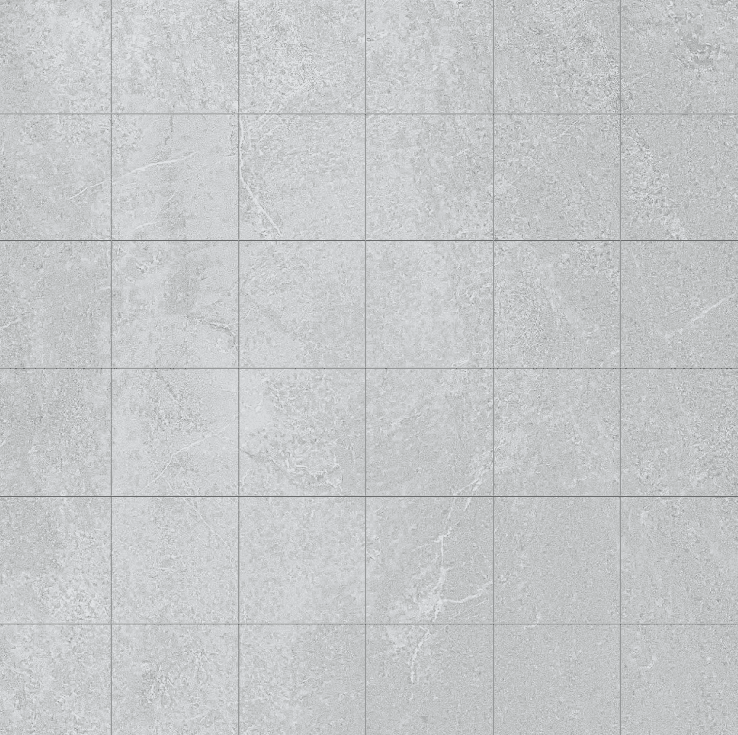
Lucas Porcelain Mosaic Tiles 300 x 300mm - 48mm x 48mm (6x6) Matte Grey are designed for New Zealand homeowners, renovators, builders and interior designers looking for a versatile porcelain mosaic with a balanced grey colour and contemporary textured finish. Supplied as 300 x 300mm sheets containing 36 individual 48 x 48mm chips arranged in a 6 x 6 configuration, these AAA grade fine porcelain mosaics provide a detailed tiled surface suitable for appropriate wall and floor applications, including indoor bathrooms and showers.
The matte grey colour provides a neutral foundation that can coordinate naturally with white sanitaryware, timber cabinetry, black fixtures, chrome tapware, stone-look finishes and other common interior materials. Its glazed matte textured finish adds subtle surface character without the stronger reflection associated with polished or gloss tiles, making it suitable for customers who want a modern, understated mosaic with enough texture to create visual interest.
Each sheet covers approximately 0.09m² and is sold individually. Customers should calculate the required surface area carefully and allow approximately 15% to 20% additional material for edge cutting, mis-cuts, breakages, installation waste and spare tiles for future repairs. Standard nationwide tile delivery is currently unavailable, so collection or eligible Auckland City and Christchurch City delivery arrangements should be considered before purchase.
Description – Lucas Porcelain Mosaic Tiles 300 x 300mm - 48mm x 48mm (6x6) Matte Grey
Lucas Porcelain Mosaic Tiles 300 x 300mm - 48mm x 48mm (6x6) Matte Grey combine compact mosaic proportions with fine porcelain construction and a restrained contemporary finish. Part of the Lucas series and specified as AAA grade, these tiles are designed for customers who want the detailed appearance of a mosaic while maintaining a neutral colour palette suitable for a broad variety of interior renovation styles.
Each sheet measures approximately 300 x 300mm and contains 36 individual porcelain chips arranged in a 6 x 6 configuration. Each chip measures approximately 48 x 48mm, creating a balanced mosaic scale that introduces visual detail without becoming excessively fine or busy.
The sheet-based format makes installation more practical than placing every individual chip separately. The chips are supplied together in an organised layout, allowing installers to position several pieces at once while maintaining the intended square pattern.
Each sheet provides approximately 0.09m² of coverage and is sold individually. This can make the product particularly useful for feature areas where customers may only need a relatively small quantity of mosaic tile.
Bathroom niches, selected shower sections, vanity splashbacks and other detailed surfaces can all potentially use the mosaic format according to the project design.
The matte grey colour is one of the strongest visual characteristics of the product. Grey offers enough depth to create definition but remains neutral enough to coordinate with a wide variety of colours and materials.
White wall tiles can create clean contrast against the grey mosaic. Timber vanities can introduce warmth and soften the cooler tile colour.
Black fixtures can reinforce a stronger contemporary appearance, while chrome and other metallic finishes can introduce controlled reflection against the matte surface.
This flexibility makes the tile useful across different interior styles without forcing the room into one highly specific colour direction.
The glazed matte textured finish adds another level of visual interest. Unlike a completely smooth tile, the surface texture creates subtle depth that can be revealed differently under natural or artificial lighting.
Because the finish remains matte, the surface does not rely on strong shine or reflection to create character.
This can be particularly effective in modern bathrooms where customers want a quieter, more architectural appearance.
The combination of texture and neutral grey colour can work naturally with concrete-look tiles, stone-inspired finishes and timber cabinetry.
This makes the product suitable for contemporary, minimalist and transitional interiors.
The smaller 48 x 48mm chips also create considerably more grout lines than conventional large-format tiles. These grout joints become an important part of the finished appearance.
The choice of grout can therefore alter the design significantly.
A grout colour close to the matte grey tile can create a more continuous surface. The individual chips remain visible, but the overall mosaic can feel relatively cohesive.
A lighter grout can provide greater definition and make the square format more noticeable.
A dark grey or charcoal grout can create a deeper tonal appearance and reduce contrast between the grout and tile.
The best choice depends on the broader interior design and maintenance preferences.
Bathrooms are one of the most natural environments for Lucas Porcelain Mosaic Tiles 300 x 300mm - 48mm x 48mm (6x6) Matte Grey. The supplied specifications identify indoor bathroom and shower applications along with wall or floor use.
The mosaic format can be particularly effective in shower areas because smaller chips create a detailed tiled surface and can accommodate certain changes in plane or compact architectural features more easily than very large-format tiles.
Shower niches are a common example. The small mosaic format can be used to create contrast in scale against larger surrounding wall tiles.
The same approach can be used behind a vanity, around selected feature sections or on other suitable surfaces where additional texture is desired.
The matte grey colour helps these areas stand out without introducing an overly bold colour.
This can be useful when customers want a feature that remains integrated with the rest of the bathroom.
The tile can also be paired with white or grey large-format tiles to create a coordinated neutral interior.
For example, broad white porcelain tiles could form the main walls while Lucas Matte Grey mosaics are used within a shower niche.
This creates contrast in both colour and scale without requiring a completely different design language.
The same principle applies to floors. The supplied specifications identify wall or floor use, giving customers flexibility when considering the mosaic for suitable floor applications.
However, specific floor suitability should always be confirmed for the intended location.
No formal slip classification has been provided in the supplied product information.
This is particularly important for shower floors and other frequently wet walking surfaces where slip resistance may be a critical project requirement.
The matte textured finish may feel more tactile than a polished tile, but customers should not assume a particular antislip rating unless it is specifically stated.
Professional advice is recommended where wet-floor traction is an important concern.
The fine porcelain construction provides useful technical characteristics. The stated water absorption is below 0.5%, reflecting the dense nature of the material.
This makes the tile relevant for suitable moisture-prone environments when correctly installed.
Low water absorption is especially useful in bathrooms and showers, but it does not remove the need for proper waterproofing.
The tile itself is only the visible surface layer.
The substrate, waterproofing membrane, adhesive, grout and any required sealants should all be selected and installed according to the intended application and relevant New Zealand requirements.
A correct wet-area system is essential for long-term performance.
The product also has a stated wear layer greater than 0.3mm.
This provides additional technical information for customers and installers assessing the tile for appropriate wall or floor use.
The tile thickness is 9mm.
This should be considered when combining the mosaic with other tile formats.
A bathroom may use 600 x 600mm or 600 x 1200mm tiles across the main surfaces and introduce the Lucas mosaic as a feature.
If the adjoining tile has a different thickness, the installer may need to adjust the adhesive bed or use appropriate trims to create a clean transition.
Even when the nominal thickness is similar, the backing used for mosaic sheets and the adhesive application can influence the final installed height.
Planning these transitions before installation begins can help prevent uneven junctions.
Suitable trims may also be required where the mosaic ends against painted walls, shower glass or another material.
The mosaic sheet itself requires careful alignment during installation.
Although the chips within each sheet are already positioned in a regular 6 x 6 arrangement, the joints between adjacent sheets need to match the spacing within each sheet.
If the gaps between sheets are wider or narrower than the internal chip spacing, the finished wall or floor may reveal obvious grid lines.
This can make each individual 300 x 300mm sheet visible rather than creating one continuous mosaic surface.
Careful installation helps prevent this.
Professional installers can check the sheet spacing and adjust individual chips if required before the adhesive sets.
The substrate should also be flat and stable.
Smaller mosaic chips can follow some surface variation more easily than large-format tiles, but an uneven substrate can still create inconsistent grout depths or misaligned pieces.
Good preparation supports a cleaner and more professional result.
Suitable adhesive should be selected for fine porcelain and the specific application.
For wall installations, the adhesive should provide appropriate support so the sheets remain correctly positioned.
For floor installations, the individual chips should receive adequate support beneath them.
Wet-area installations also need adhesives and grouts that are compatible with the selected waterproofing system.
Grout becomes especially important with mosaics because it covers a larger proportion of the finished surface than with large-format tiles.
Customers should consider both appearance and maintenance when selecting grout.
A closely matched grey grout may create a calm and understated result.
A lighter grout can make the mosaic pattern more graphic and visible.
A darker grout can create a deeper tonal appearance.
The grout itself should be suitable for the environment.
Bathrooms and showers require products designed to handle repeated moisture exposure.
Regular maintenance is also important because the greater number of grout joints can collect soap residue, water deposits and everyday grime if neglected.
The matte textured surface itself should be cleaned using products appropriate for porcelain tile.
Routine cleaning can help preserve the original appearance and prevent residue from becoming difficult to remove.
Soft cleaning tools and suitable tile cleansers are generally appropriate when used according to their own instructions.
Harsh abrasive methods should be avoided where they could alter or damage the glazed surface.
In bathrooms and showers, good ventilation can also support easier maintenance by reducing prolonged moisture.
The textured finish may require slightly more attention than a completely smooth tile because small surface variations can collect residue.
Regular cleaning helps maintain the visual character of the tile.
The matte finish can also help create a softer bathroom appearance than a highly reflective mosaic.
Gloss mosaics can produce strong highlights under bathroom lighting, while matte surfaces generally create a calmer visual effect.
This makes Lucas Matte Grey suitable for customers who prefer restrained contemporary styling.
The colour also provides useful contrast without becoming as dominant as dark charcoal or black.
Compared with lighter grey mosaics, matte grey introduces more definition while remaining versatile enough for a wide variety of interiors.
This balance can be useful in bathrooms where the tile needs to provide texture without becoming the only visual focal point.
The product can also coordinate with concrete-look materials.
Grey concrete-inspired tiles, black fixtures and timber cabinetry can create an industrial-influenced interior while the mosaic adds smaller-scale texture.
Alternatively, the same mosaic can be paired with pale stone-look wall tiles for a softer and more spa-inspired environment.
This demonstrates how one neutral mosaic can support several different design directions.
The tile can also be used in suitable laundry areas or other interior locations where a detailed tile feature is desired.
A small splashback behind a laundry sink can gain additional visual interest from the square mosaic pattern.
White appliances and cabinetry can create contrast, while timber storage can add warmth.
The neutral grey colour makes coordination relatively straightforward.
The 48 x 48mm chip format also provides a useful balance between large and very small mosaics.
Tiny mosaic pieces can create a highly intricate surface with numerous joints.
Larger mosaics can lose some of the detailed appearance associated with the format.
At approximately 48mm square, these chips sit between those extremes.
They remain clearly visible individually while still creating the repeated pattern customers expect from a mosaic.
This can help the tile work well in both feature areas and larger installations.
The 6 x 6 configuration provides consistent geometry.
Thirty-six chips create a regular surface that can suit minimalist interiors where simple repetition is preferred over elaborate patterns.
The product does not rely on decorative printing or strong colour variation.
Instead, its character comes from the square format, matte grey colour, surface texture and grout lines.
This can help the tile remain visually relevant as interior styles change over time.
Permanent tiled surfaces generally remain in place much longer than accessories and fixtures.
Choosing a neutral mosaic can therefore provide long-term flexibility.
A bathroom initially fitted with chrome tapware could later be updated with black or brushed metallic fittings.
The matte grey tile can remain compatible with both.
Likewise, a timber vanity could later be replaced with white or charcoal cabinetry without necessarily requiring the mosaic to be removed.
This adaptability is one of the advantages of neutral tile colours.
Lighting can significantly influence the way grey is perceived.
Warm artificial lighting may make the tile appear softer and slightly warmer.
Cooler lighting can create a crisper or somewhat deeper grey appearance.
Natural daylight can reveal subtle surface texture differently throughout the day.
Directional lighting can create small shadows across the textured finish.
This adds visual depth without relying on gloss.
Customers should therefore consider actual room lighting when selecting surrounding finishes.
The same tile can appear slightly different next to white cabinetry compared with timber or black surfaces.
Online images should also be treated as a representation rather than an exact colour reference.
Computer monitors, mobile devices and display calibration settings can alter grey tones and texture appearance.
The physical product should therefore be used as the final reference when coordinating cabinetry, paint and other permanent materials.
This is particularly important when several grey surfaces are being combined.
Small differences in undertone can become more noticeable when materials are installed next to each other.
Quantity planning is another important part of the project.
Each sheet provides approximately 0.09m² of coverage and is sold individually.
Customers should first measure the complete surface area that needs to be tiled.
Approximately 15% to 20% additional material should then be added.
This allowance is standard practice when purchasing tiles and helps cover edge cuts, mis-cuts, breakages and general installation waste.
Mosaic installations can require numerous detailed cuts.
Shower drains, niches, corners, wall endings and plumbing fixtures can all require partial sheets or individual chips.
Some offcuts can be reused elsewhere, but others may not suit another part of the installation.
Having adequate extra material available helps prevent delays.
Even experienced installers can encounter cuts that need to be repeated.
The extra quantity also allows spare sheets or chips to be retained for future repairs.
This is particularly useful because tile ranges and production batches can change over time.
Even if a similar Lucas Matte Grey mosaic remains available later, subtle differences in shade, texture or chip dimensions may make a replacement noticeable.
Original spare material provides the best opportunity for a consistent repair.
For this reason, customers should store suitable leftover tiles after installation rather than discarding all remaining material.
Occasional damage can occur during handling or transport.
The supplied guidance notes that a minimal quantity of tiles may sometimes become broken or edge damaged.
These affected pieces should not automatically be discarded.
If one portion of a sheet is damaged, the remaining chips may still be useful in areas that already require cutting.
Corners, edges, trims and other detailed locations can provide opportunities to use partial sheets effectively.
This helps reduce unnecessary waste.
The recommended 15% to 20% additional allowance provides flexibility for situations like these.
Quantity calculation is relatively straightforward because each sheet covers 0.09m².
Once the project area and waste allowance have been calculated, the final area can be divided by 0.09m² to estimate the number of sheets required.
Any partial result should be rounded upward because the product is sold per complete sheet.
For complicated projects, a professional installer can help verify the quantity before ordering.
This may be particularly valuable for shower floors, irregular niches or areas with numerous fixtures.
Accurate ordering can reduce delays and help ensure the complete installation uses material from the same purchase where possible.
Before installation begins, customers or installers should inspect the sheets.
The quantity, colour, texture and chip alignment should all be checked before adhesive is applied.
Any damaged sheets can be identified early and allocated to cut areas where practical.
Viewing several sheets together under the actual project lighting can also help confirm the final appearance.
Once installation begins, resolving colour or quantity concerns becomes more difficult.
Preparation therefore plays an important role in achieving a satisfactory result.
The tiles should be stored carefully before installation.
Mosaic sheets should remain supported and protected from unnecessary bending or impact.
Although the backing keeps individual chips together, the porcelain pieces can still chip if handled roughly.
Careful storage and transport help minimise this risk.
The tiled surface should also be protected after installation if other renovation work continues nearby.
Construction debris, tools and heavy materials can damage the tile or grout if the area remains exposed.
Temporary surface protection can help preserve the finished installation until the wider project is complete.
Shipping arrangements should be considered before purchase.
Standard nationwide tile delivery is currently unavailable.
Customers will generally need to collect orders from the designated goods collection point.
Although individual mosaic sheets are compact, larger projects can require many sheets and the combined weight can become substantial.
Suitable transport and careful loading should therefore be arranged.
Customers in Auckland City or Christchurch City may be able to arrange delivery using the seller's own delivery team.
This should be confirmed at the time of purchase because availability may depend on the specific address and order.
Planning collection or delivery before installation day can help keep the renovation schedule organised.
The tiles should ideally be onsite and inspected before the installer begins work.
This provides time to check the quantity and condition of the material and identify any pieces that may be best used for cut sections.
The matte grey Lucas mosaic can suit a broad range of New Zealand property styles.
Modern homes can use it to create detailed shower features or bathroom niches.
Apartments can benefit from the compact format in smaller vanity areas or splashbacks.
Renovated character properties can use the tile as a contemporary contrast against classic white fixtures.
Investment properties may also benefit from the broad appeal of neutral grey.
The product can also function differently depending on grout and surrounding materials.
Matched grey grout can create a subtle and understated surface.
Light grout can make the square pattern more prominent.
Black fixtures can create a stronger contemporary design.
Timber can soften the grey and introduce warmth.
Chrome can add brightness.
This flexibility gives homeowners and designers several ways to adapt the same tile to different interiors.
The tile can act as a supporting surface or become a feature depending on how it is used.
A full wall of mosaic can create significant texture.
A small niche can provide a subtle accent.
A vanity splashback can add detail without dominating the room.
This range of possible applications makes the mosaic useful for both large and small renovation projects.
For New Zealand homeowners, renovators and builders seeking a neutral porcelain mosaic with compact proportions, understated texture and flexible wall or floor potential, Lucas Porcelain Mosaic Tiles 300 x 300mm - 48mm x 48mm (6x6) Matte Grey provide a practical and visually refined option.
Key Points
300 x 300mm Mosaic Sheets: Each sheet measures approximately 300 x 300mm and provides around 0.09m² of coverage, making the product practical for smaller feature areas as well as larger mosaic installations.
36 Individual 48 x 48mm Chips: Each sheet contains 36 square porcelain chips arranged in a 6 x 6 configuration, creating a balanced geometric mosaic pattern with more visual texture than conventional large-format tiles.
AAA Grade Fine Porcelain: Manufactured from fine porcelain and specified as AAA grade, the tiles have a 9mm thickness, stated wear layer greater than 0.3mm and water absorption below 0.5%.
Matte Grey Textured Finish: The glazed matte textured surface provides a versatile neutral appearance with subtle visual depth, coordinating naturally with white, timber, black, chrome and other contemporary interior finishes.
Benefits
Detailed Contemporary Styling: The 48 x 48mm chip format creates additional grout definition and surface texture, making the mosaic particularly useful for shower areas, bathroom niches, vanity sections and other feature surfaces.
Versatile Neutral Colour: Matte grey can complement both warm and cool materials, allowing customers to coordinate the tile with timber cabinetry, white sanitaryware, black fixtures, chrome tapware and stone-look finishes.
Suitable for Wall or Floor Applications: The supplied specifications identify the mosaic for appropriate wall or floor use, including indoor bathroom and shower environments, providing flexibility for coordinated interior renovation projects.
Practical Sheet-Based Installation: Thirty-six individual chips are supplied together on each 300 x 300mm sheet, helping installers create a consistent mosaic pattern without positioning every tile separately.
Why Choose This Lucas Porcelain Mosaic Tiles 300 x 300mm - 48mm x 48mm (6x6) Matte Grey?
Lucas Porcelain Mosaic Tiles 300 x 300mm - 48mm x 48mm (6x6) Matte Grey are a practical choice for New Zealand customers who want a detailed porcelain mosaic with neutral colouring, understated texture and broad interior compatibility. Their combination of AAA grade fine porcelain, balanced square chips and matte grey styling makes them suitable for a wide variety of carefully planned bathroom, shower and interior renovation projects.
The mosaic format is one of the strongest advantages. Each sheet contains 36 individual chips, creating considerably more texture and grout definition than a conventional large-format tile.
This makes the product particularly useful for feature areas where customers want the tiled surface to provide additional visual interest.
Bathroom niches, shower sections and vanity areas can all benefit from the compact pattern.
The matte grey colour provides another major advantage. It creates enough depth to distinguish the mosaic from white or pale surfaces while remaining neutral enough to work with many different fixtures and materials.
Timber can introduce warmth, white can create crisp contrast, black can create a stronger contemporary effect and metallic finishes can provide brighter highlights.
The textured matte surface also adds subtle character without relying on strong shine.
This can make it especially suitable for customers who prefer restrained, modern interiors.
Fine porcelain construction provides useful technical characteristics.
The stated water absorption below 0.5% reflects the dense material, while the 9mm thickness and wear layer greater than 0.3mm provide additional information for project planning.
The supplied specifications identify wall and floor use along with indoor bathroom and shower applications.
Correct wet-area installation remains essential.
Waterproofing, substrate preparation, adhesive and grout should all be suitable for the intended environment and relevant New Zealand requirements.
Where a formal slip rating is needed, customers should confirm the tile's suitability because no specific antislip classification has been supplied.
The product is sold per 0.09m² sheet, which provides useful flexibility when ordering for both small and large surfaces.
Customers should add approximately 15% to 20% to the measured area for cuts, mis-cuts, breakages and future repair needs.
Keeping spare sheets or individual chips is particularly useful because future production batches may vary slightly in grey tone, glaze or texture.
Minor damage during handling or transport does not always make a full sheet unusable.
Affected pieces can often be allocated to areas where cutting is already required, helping reduce unnecessary waste.
The neutral design also provides long-term styling flexibility.
Bathroom tapware, cabinetry hardware, mirrors and accessories can change while the matte grey mosaic remains compatible with a broad range of new finishes.
Shipping restrictions should also be considered before purchase. Standard nationwide tile delivery is currently unavailable, so customers generally need to collect orders from the designated goods collection point.
Auckland City and Christchurch City customers may be able to arrange delivery using the seller's own team, subject to confirmation.
For homeowners, builders and renovators looking for a compact porcelain mosaic with contemporary neutral styling, subtle texture and flexible wall or floor potential, Lucas Porcelain Mosaic Tiles 300 x 300mm - 48mm x 48mm (6x6) Matte Grey provide a balanced and practical choice.
Conclusion
Lucas Porcelain Mosaic Tiles 300 x 300mm - 48mm x 48mm (6x6) Matte Grey provide a versatile mosaic option for New Zealand bathrooms, showers and other suitable interior wall or floor applications. Manufactured from AAA grade fine porcelain, these tiles combine a neutral matte grey colour with a glazed textured finish and balanced square mosaic format.
Each sheet measures approximately 300 x 300mm and contains 36 individual 48 x 48mm chips arranged in a 6 x 6 configuration. One sheet provides approximately 0.09m² of coverage and is sold individually.
The tile has a 9mm thickness, stated wear layer greater than 0.3mm and water absorption below 0.5%, providing useful technical specifications for project planning.
The matte grey surface works naturally with white sanitaryware, timber cabinetry, black fixtures, chrome tapware and stone-look materials, while the textured finish adds visual depth without relying on strong gloss.
The mosaic format can introduce additional detail across shower areas, niches, vanity sections, feature walls and other carefully selected surfaces where customers want more texture than large-format tiles provide.
Customers should calculate the required area carefully and allow approximately 15% to 20% additional material for edge cuts, mis-cuts, breakages, installation waste and spare tiles for future repairs.
Minor damaged or edge-affected pieces may still be useful for areas where cutting is required, helping reduce unnecessary waste.
Correct substrate preparation, waterproofing, adhesive and grout remain essential, particularly in bathrooms and showers. Customers should also confirm suitability for any installation requiring specific slip resistance.
Standard nationwide tile delivery is currently unavailable. Orders generally need to be collected from the designated goods collection point, while Auckland City and Christchurch City customers may be able to arrange delivery using the seller's own team subject to confirmation.
Actual matte grey colour and textured appearance may vary slightly from online images due to room lighting, monitor calibration and display settings.
For New Zealand customers seeking a compact porcelain mosaic with balanced grey styling, low water absorption and practical wall or floor potential, Lucas Porcelain Mosaic Tiles 300 x 300mm - 48mm x 48mm (6x6) Matte Grey provide a refined and adaptable long-term option.
The product may be provided by a different brand of comparable quality.
The actual product may vary slightly from the image shown.
Shop amazing plants at The Node – a top destination for plant lovers